



As security threats become more complex, organisations are looking beyond traditional guarding services to find better ways of protecting their people, property and information. Josephat Mose, Chief Executive Officer of Josngare Security Services Limited, shares his experience on the changing security landscape, the role of technology and why digital visitor management will become an important part of modern security.
For many years, security in most organizations meant having a guard at the gate, a visitor book and perhaps a few security cameras around the premises. While these measures are still common, the changing nature of security threats is pushing businesses to rethink how they protect their people, property and information.
Today, organisations are looking for more reliable ways to identify risks, monitor activities and control access to their premises. This shift is changing the role of security personnel and increasing the need for better systems supported by technology.

Having spent 11 years in the security industry, including nearly eight years leading Josngare Security Services Ltd, Josephat Mose has witnessed this transformation firsthand. He believes security should no longer be viewed simply as deploying guards but as having a complete system that brings together people, processes and technology.
“Security is not just a guard at the gate; it is a system,” he says.
A Changing Security Landscape
According to Mose, the security industry has moved from relying mainly on manpower to using intelligence and technology to prevent incidents. Clients are increasingly demanding CCTV surveillance, access control, incident reporting and professional supervision.
The threats facing businesses have also become more complex. These include insider threats, organised theft in estates and warehouses, fraud and impersonation at entry points. Criminals are also finding new ways to exploit security weaknesses, including studying CCTV blind spots and using information shared on social media to monitor people’s movements.
Despite these changes, Mose believes that one of the biggest misconceptions is that hiring guards alone is enough to guarantee security.
An organisation can have several guards on duty but still remain vulnerable if there is no proper supervision, risk assessment or clear guidance on how they should perform their duties.
He explains that an effective Security Management System should begin with identifying potential risks and putting measures in place to address them. This includes having clear security policies, standard operating procedures, trained personnel, appropriate technology, incident reporting and an emergency response plan.
Risk assessment helps organisations identify areas of vulnerability, while policies and procedures guide security officers on what is expected of them and how to respond to different situations.
The People Behind Effective Security Management
While technology is becoming increasingly important, Mose believes that people remain at the centre of effective security management.
There is a difference between simply providing guards and professionally managing a security operation. The latter involves supervising officers, checking their welfare, inspecting their work, using technology to support their duties and keeping clients informed through regular reports.
At Josngare, the focus is not simply on providing guards but on giving clients peace of mind.
Achieving this requires investing in the people responsible for delivering security services. At the company, recruitment involves careful selection and background checks, followed by training in customer care, first aid, fire safety, report writing and discipline. Officers also receive refresher training and undergo surprise spot checks to ensure they maintain the expected standards.
However, managing security personnel comes with its own challenges. Low pay across the industry, high staff turnover and long working hours without adequate rest continue to affect the sector. Some clients also expect quality services while offering very low rates, making it difficult for companies to maintain good working conditions.
Mose believes security companies must take care of their employees if they expect them to take good care of their clients. At Josngare, the company focuses on timely salary payments, proper off-days and recognising good performance.
Accountability is also maintained through duty rosters, daily occurrence books, supervision visits and regular performance checks.
Technology Is Changing How Security Works
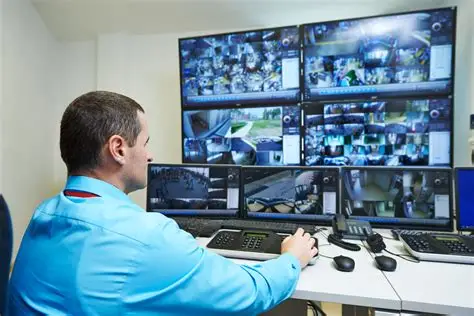
Technology is playing a bigger role in how security services are delivered. Today, clients can monitor their premises using their phones, while security companies can track patrols through GPS, receive alarm alerts and review CCTV footage when incidents occur.
Mose describes CCTV as the eyes of the operation, access control as the gatekeeper, alarms as the early warning system and GPS as proof that patrols have been conducted. When these technologies work together, they make security operations more effective.
At Josngare, for instance, when an alarm is triggered, the control room first checks CCTV footage to establish what is happening. Once the alert is confirmed, the Alarm Response Team is dispatched to the site, while the guard on duty and the client are informed. This helps the team respond quickly while avoiding unnecessary responses to false alarms.
Although technology is becoming more important, Mose does not believe it can replace human security officers. A camera can record a crime, but it cannot physically stop it. Instead, technology should support security personnel and help them perform their duties more effectively.
He expects the industry to make greater use of artificial intelligence in CCTV monitoring, biometric access systems, drone surveillance, mobile reporting applications and centralised security control centres. In his view, security companies that fail to embrace these developments may struggle to keep up with changing client expectations.
The Future of Visitor Management: Moving Beyond the Paper Register
One area where Mose believes technology will make a significant difference is visitor management.
In many organisations, visitor registration still relies on a paper book at the entrance. Visitors write down their names and other details before being allowed in. However, as Mose points out, this approach has its limitations. A handwritten register cannot confirm whether the details provided are genuine, establish whether a visitor is still within the premises or provide reliable information when a security incident occurs.
He believes digital visitor management and identity verification will change how organisations handle access to their premises.
With digital systems, a visitor’s identification can be scanned and verified, their photograph captured, the person they intend to visit recorded, and their entry and exit times tracked. This gives organisations a clearer record of who has entered their premises and who is still within the building.
Beyond improving record keeping, digital visitor management can help reduce impersonation, fake visitors and unauthorised access. It also provides useful information during emergencies such as fires, when organisations need to account for everyone within their premises.
The benefits are not limited to security teams. Visitors can also enjoy a smoother experience through pre-registration and faster check-in using a QR code or identification document, reducing the queues often associated with manual registration.
For Mose, digital visitor management provides an important link between security personnel and technology. The guard remains responsible for welcoming visitors, observing activities and responding to incidents, but is now supported by a digital system rather than relying only on memory and handwritten records.
This is where solutions such as DATEM, a digital platform built on GS1 standards, become relevant. DATEM helps organisations manage visitor access, identity verification and entry authorisation, providing a more structured way to ensure that people entering their premises are identified, authorised and accounted for.
By bringing digital processes into visitor management, organisations can improve access control while maintaining reliable visitor records. It also demonstrates how GS1 standards can support the development of digital solutions that address everyday business and security needs.
Mose believes the shift from paper visitor books to digital visitor management will become increasingly necessary in Kenya. He expects more offices, residential estates, schools, hospitals and warehouses to adopt these systems over the next five years.
In his view, digital visitor management is no longer a luxury but a necessity for organisations looking to strengthen their security arrangements.
Balancing Security Costs with Quality
Despite the opportunities presented by technology, the cost of delivering quality security services remains a challenge.
Mose points to delayed client payments, rising costs of uniforms and training, and competition from unlicensed security providers as some of the issues affecting the industry.
He cautions businesses against choosing security providers based on price alone, noting that a low-cost service may end up being more expensive if it fails when protection is needed most.
Organisations should first conduct a proper risk assessment to understand their security needs before deciding on the level of protection required.
He also encourages businesses to regularly review the performance of their security providers. This means checking whether incidents are reducing, reports are submitted on time, guards remain alert and disciplined, and supervisors regularly visit the sites.
When selecting a security provider, businesses should also confirm whether the company is licensed by the Private Security Regulatory Authority (PSRA). Other important considerations include the company’s management structure, staff training, supervision, use of technology and ability to provide references and incident reports.
Looking Ahead: Building a More Secure Future
Reflecting on his experience as a business owner, Mose says that the way a company treats its employees has a direct impact on the quality of service it delivers. He believes security personnel should be treated well, while discipline and integrity should never be compromised.
He also places great importance on communicating openly with clients, even when challenges arise, noting that transparency helps build trust and protects a company’s reputation.
For organisations looking to strengthen their security systems, his advice is to start with a professional risk assessment, invest in both trained personnel and technology, and build a good working relationship with their security provider. Security should be treated as a shared responsibility, with regular communication and performance reviews.
Looking ahead, Mose sees Kenya’s security industry becoming more professional, technology-driven and focused on identifying risks before incidents happen. He expects security officers to receive better training and support, while digital systems will play a bigger role in monitoring, identity verification and access control.
At Josngare Security Services Limited, the ambition is to be part of this change by providing reliable security services supported by technology and professional management.
As the security landscape continues to change, organisations must recognise that protecting people and property requires more than having someone standing at the gate. It calls for proper planning, trained personnel, effective supervision and technology that makes security management more reliable and accountable.
By Tech Nova


