

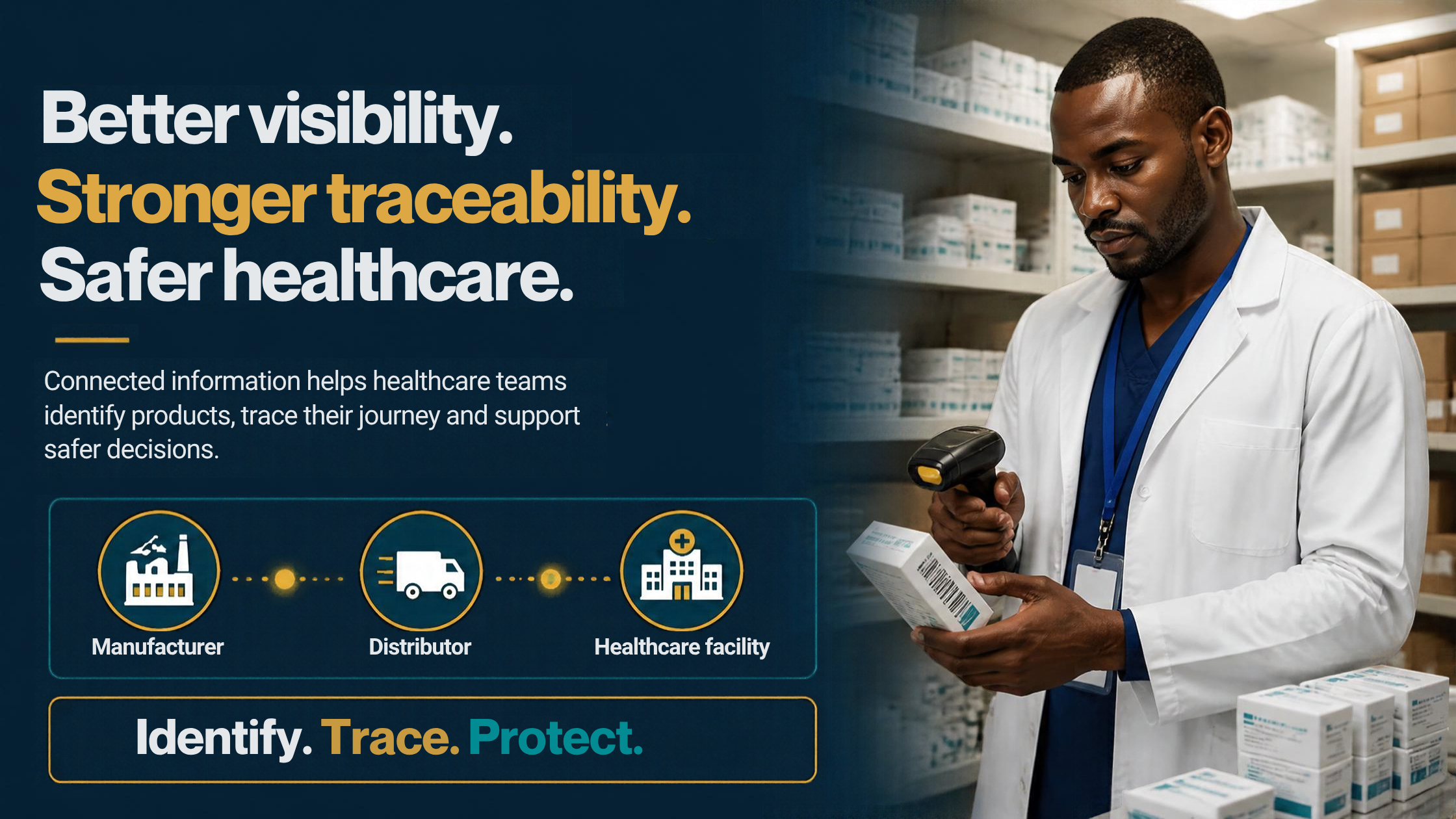

Having joined the TnT Consortium in November 2025, GS1 Kenya is contributing its standards expertise to Kenya’s digital health transformation, with work underway to strengthen visibility and traceability across the healthcare supply chain.
Kenya is advancing its digital health agenda to improve patient safety, strengthen accountability, and enhance the management of medicines and medical devices across the healthcare supply chain. Achieving these objectives requires more than digital systems alone; it also depends on the adoption of common standards that enable healthcare products to be uniquely identified and information to be consistently shared across systems and stakeholders. It is within this context that GS1 Kenya is working with the Digital Health Agency (DHA) through the Track and Trace (TnT) Consortium, contributing technical expertise in global standards to support the development of a more connected and interoperable healthcare system
GS1 Kenya’s involvement builds on 16 years of engagement with the healthcare sector, promoting the adoption of global standards to improve product identification, traceability, and supply chain efficiency. This work has involved engagement with key stakeholders, including the Pharmacy and Poisons Board (PPB) and the Kenya Medical Supplies Authority (KEMSA).

A significant milestone came in November 2025, when GS1 Kenya joined the TnT Consortium, a committee established by the DHA to support the implementation of its mandate. Through this participation, GS1 Kenya is contributing standards expertise to discussions and initiatives aimed at strengthening traceability and improving the exchange of information across Kenya’s healthcare supply chain.
Joseph Oloo, Team Lead at GS1 Kenya and a member of the TnT Consortium committee, highlights the role of GS1 Kenya as a standards advisor, guiding stakeholders on the implementation of GS1 Standards across the healthcare value chain, including pharmaceutical and medical device manufacturers, distributors and healthcare facilities.
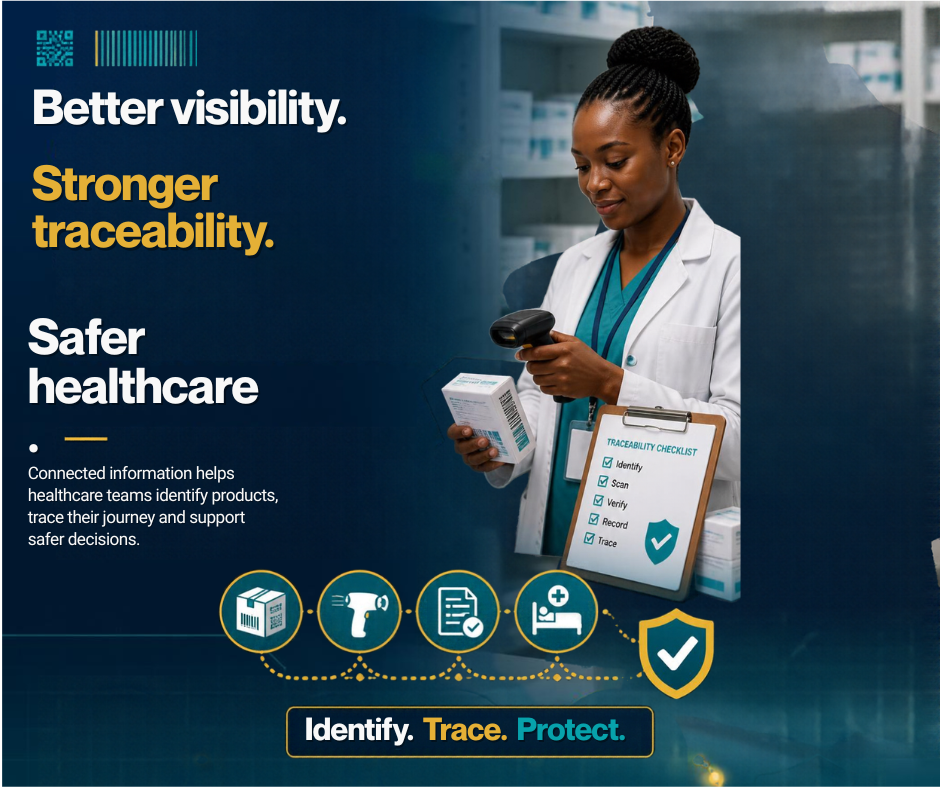
Strengthening visibility across the healthcare supply chain
The initiative seeks to address persistent challenges in healthcare supply chains, including the risk of falsified medicines, limited visibility of product movement, difficulties tracing products through distribution channels and the need for greater accountability when recalls are required.
GS1 Standards provide a common framework for identifying healthcare products and sharing information about their movement. Global Trade Item Numbers (GTINs) uniquely identify trade items, while GS1 DataMatrix barcodes can carry additional information such as batch or lot numbers, expiry dates and serial numbers, where applicable. These identifiers and data elements support product verification, targeted recalls and more reliable tracking across the supply chain.
For example, identifying individual product units using GTINs and serial numbers, where implemented, can help distinguish one unit from another. Combined with batch and expiry information, this can support more precise identification of affected products when safety concerns arise. When these data are captured and shared effectively, healthcare stakeholders can make better-informed decisions about the products they receive, distribute and administer.
Another important component is Electronic Product Code Information Services (EPCIS), a GS1 standard that enables organisations to share information about supply chain events. EPCIS supports visibility by capturing key details about what product was involved, when and where an event occurred, why it took place and the parties involved.
This information can help stakeholders establish a clearer picture of product movement through the healthcare value chain. When organisations capture and exchange event data consistently, it becomes easier to follow a product’s journey, identify gaps in visibility and support investigations when discrepancies occur.
Supporting Kenya’s Digital Health Agenda
The Digital Health Agency’s mandate includes developing and maintaining a comprehensive digital health ecosystem that improves access to healthcare, supports better patient outcomes and safeguards health data. Achieving these objectives requires systems that can communicate effectively and provide reliable information to authorised stakeholders.
GS1 Kenya’s participation in the Track and Trace Consortium brings standards expertise into this broader national effort. Through stakeholder engagement, technical guidance and workshops, GS1 Kenya is supporting awareness and adoption of global standards across the healthcare ecosystem.
The collaboration also aligns with efforts to strengthen the identification and traceability of medicines and medical devices. By encouraging consistent product identification and structured information exchange, the initiative aims to improve the quality and availability of data needed to support healthcare supply chain operations.
This is particularly important in a complex distribution environment involving manufacturers, importers, distributors, logistics providers and healthcare facilities. Without consistent identification and accessible records of product movement, tracing a product across multiple organisations can be difficult. Common standards offer a shared foundation for connecting information across these different points in the supply chain.
NLMIS Integration and EPCIS Event Reporting Underway
A key area of ongoing work is the integration of traceability information with the National Logistics Management Information System (NLMIS), alongside EPCIS event reporting. These activities are intended to strengthen the exchange and visibility of information about healthcare products as they move through the supply chain.
Through event reporting, participating organisations can contribute information about relevant product movements and supply chain activities. Connecting this information with logistics systems can help build a more comprehensive view of the distribution process and support better coordination among stakeholders.
However, effective traceability depends on more than technology alone. It requires accurate product identification, consistent data capture, appropriate system integration and participation by organisations across the value chain. Continued stakeholder engagement will therefore be essential to translating the technical work into practical benefits for healthcare providers and patients.
Private-Sector Rollout Planned for 2027
Looking ahead, a private-sector rollout is planned for 2027. This is expected to be an important step towards expanding participation in the digital health ecosystem and strengthening the adoption of traceability practices beyond the public sector.
Broader implementation could help improve the availability of product information, support more effective recalls and strengthen accountability among supply chain participants. It could also contribute to efforts to identify suspicious product movements and address the risks associated with falsified medicines and unregulated suppliers.
These are intended benefits rather than outcomes that can already be assumed. Their realisation will depend on the scope of implementation, stakeholder participation, data quality and the effective connection of systems across the healthcare value chain.
For GS1 Kenya, the planned rollout represents a continuation of its longstanding work to promote standards-based traceability in healthcare. Its participation in the Track and Trace Consortium provides a platform to contribute technical knowledge while working alongside other stakeholders towards a more connected healthcare ecosystem.
A Milestone in Kenya’s Healthcare Traceability Journey
GS1 Kenya’s entry into the DHA Track and Trace Consortium in November 2025 marks an important development in its 16-year journey to advance global standards in healthcare. The collaboration with DHA reflects the growing importance of common standards in supporting digital health initiatives, improving information exchange and strengthening visibility across supply chains.
With NLMIS integration and EPCIS event reporting ongoing, the focus is now on translating standards and technical frameworks into practical systems that support the movement of reliable information across the healthcare ecosystem.
Ultimately, effective healthcare traceability is about more than tracking products. It is about strengthening accountability, improving the ability to respond to product safety concerns and ensuring that stakeholders have access to the information they need to make informed decisions.
As Kenya continues to advance its digital health agenda, GS1 Kenya’s contribution through the Track and Trace Consortium reinforces the role of global standards in building a more transparent, efficient and connected healthcare supply chain one that supports the broader goal of protecting patients and strengthening trust in the healthcare system.
By Dr.Amina Wells


