



When a patient walks into a healthcare facility, they expect accurate diagnosis, safe medication, and continuity of care. Achieving these outcomes, however, requires more than sound medical policies and regulations. It also depends on the ability to accurately identify patients, healthcare providers, medical products, and service locations, while ensuring that reliable information is available when and where it is needed.
In Kenya, strengthening traceability across the healthcare system presents an opportunity to improve patient safety, reduce medication-related risks, enhance operational efficiency, and support informed clinical decisions.
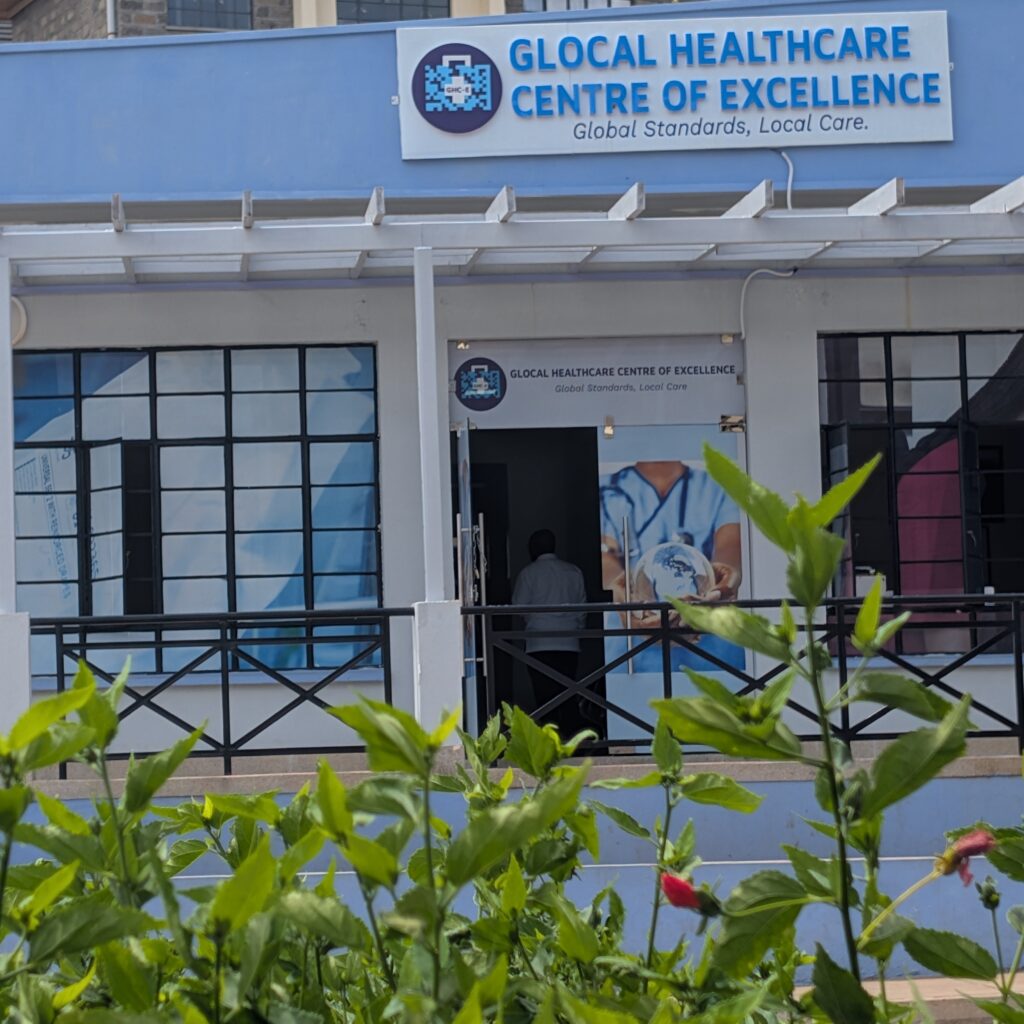
The Global Healthcare Centre of Excellence (GHCE), a subsidiary of GS1 Kenya, is demonstrating how global supply chain standards can be applied in a healthcare setting to address these challenges. Operating as a licensed Level 3B healthcare facility under the Kenya Medical Practitioners and Dentists Council (KMPDC), GHCE integrates identification, data capture, and information sharing into its day-to-day operations to strengthen accountability and traceability throughout the patient care journey.

Bringing Traceability into Patient Care
To understand how this approach works in practice, The Tracker spoke with Clinical Officer Richard Odongo, who is in charge of GHCE’s facility in Kisaju, Kajiado County. He shared insights into the centre’s operations, its approach to patient safety, and its plans to extend the benefits of GS1 standards across the healthcare sector.
According to Odongo, GHCE was established to demonstrate how globally recognised supply chain standards can be integrated into healthcare delivery. While existing health policies and regulatory frameworks provide guidance for service delivery, effective implementation also requires practical mechanisms to link patients, providers, services, and medical products to reliable, traceable records.
This is particularly important when responding to product recalls, verifying the medicines administered to patients, managing referrals, and ensuring that healthcare professionals have access to accurate clinical histories.
GHCE addresses these needs by applying the three core principles of GS1 traceability: identify, capture, and share.
Identification ensures that patients, healthcare providers, medical products, equipment, and locations can be uniquely recognised. Data capture records relevant information at the point of service, while information sharing makes the data available to authorised users who need it to support care delivery and decision-making.
Together, these principles create a more connected approach to healthcare management, where critical information can be traced across different service points.
How GS1 Standards Work in Practice
GHCE operates a paperless model supported by integrated digital systems that enable the electronic identification and tracking of key entities throughout the facility.
Patients and healthcare providers are assigned Global Service Relation Numbers (GSRNs), while medical products are identified using Global Trade Item Numbers (GTINs). Equipment and reusable assets can be identified using Global Individual Asset Identifiers (GIAIs) and Global Returnable Asset Identifiers (GRAIs), respectively. Global Location Numbers (GLNs) identify physical locations, including triage areas, emergency rooms, theatres, and pharmacies.
These identifiers establish a common language for recognising the different entities involved in healthcare delivery. When combined with appropriate digital systems, they help link patients to services received, products used, and locations where care is provided.
The facility also uses QR codes and GS1 DataMatrix barcodes to support electronic data capture and access to relevant information. This reduces dependence on manual records and helps make information available across service points, including when patients are referred for further treatment.
At the centre of this approach is a scanning-for-safety protocol. Healthcare staff scan relevant data carriers at designated service points, supporting accurate recording of clinical activities and reducing the risk of errors associated with manual data entry.
Patients receive a PIN-protected, QR-coded patient card through which they can access their medical information, including triage records, clinical notes, laboratory results, and prescriptions. This supports greater patient access to health information and can facilitate continuity of care when records need to be shared with other healthcare providers, subject to appropriate access controls.
Strengthening Medicine Traceability and Referrals
One of the most significant applications of traceability at GHCE is the management of medicines.
The ability to identify products accurately and record their movement through the healthcare process supports more precise tracking of medicines from prescription to dispensing and use. At GHCE, doctors can prescribe medicines with reference to specific product batches, while pharmacy technicians use the recorded information to support accurate dispensing.
This approach can strengthen the facility’s ability to identify affected products during a recall and determine where relevant stock has been distributed or used. Where the required product-level data is captured and retained, traceability can extend to individual consumer units, including specific doses or units of medicine.
Such visibility is important for patient safety. In the event of a product quality concern or recall, healthcare providers need to identify affected products promptly, establish where they have gone, and take appropriate action to minimise potential harm.
Traceability also improves the management of referrals. Rather than relying solely on brief referral notes, healthcare professionals can use available, time-stamped clinical records to gain a clearer understanding of a patient’s medical history and previous interventions. This can support more informed decisions, reduce information gaps, and improve coordination between care providers.
These capabilities demonstrate how digital identification and information sharing can help transform traceability from a supply chain function into a practical tool for improving healthcare delivery.
Preparing for the Future of Pharmaceutical Traceability
The importance of product identification and traceability is growing as the healthcare sector strengthens its focus on medicine safety, product authentication, and supply chain visibility.
In Kenya, the Pharmacy and Poisons Board (PPB) has been advancing the adoption of GS1 standards within the pharmaceutical supply chain. As implementation requirements and timelines apply to relevant industry stakeholders, manufacturers, suppliers, distributors, and pharmacies need to understand how standardised identification and data-sharing practices can support compliance and improve the management of medical products.
GHCE provides a practical environment for demonstrating how these standards can be incorporated into healthcare operations. Its experience offers lessons for facilities and pharmaceutical supply chain stakeholders seeking to improve product visibility, strengthen recall preparedness, and support more accountable medicine management.
Beyond regulatory considerations, adopting common standards can help create greater interoperability across the healthcare ecosystem, allowing different stakeholders to identify products consistently and exchange information more effectively.
Overcoming the Challenges of Digital Transformation
Transitioning from traditional paper-based processes to a highly structured digital environment requires adjustments in both technology and behaviour.
According to the facility’s experience, some clients initially find the procedures cumbersome because they involve capturing more detailed information than they may be accustomed to providing in conventional healthcare settings. The process can feel unfamiliar, particularly where patients and other users do not immediately understand why specific information is required.
However, as the procedures are explained and clients experience the treatment process, they become better able to appreciate the benefits of structured information capture and digital records.
This experience highlights an important lesson for healthcare transformation: successful implementation depends not only on technology but also on effective communication, user education, staff training, and consistent application of established processes.
For facilities considering similar approaches, change management is essential. Healthcare workers must understand how standardised identification and data capture support their work, while patients need clear explanations of how their information is collected, accessed, and protected.
Equally important is ensuring that digital health information is handled securely and that access is governed by appropriate privacy and confidentiality safeguards.
GHCE’s experience illustrates the potential of combining global standards with practical implementation to strengthen traceability in everyday healthcare delivery.
Expanding Access and Building Healthcare Capacity
Looking ahead, GHCE aims to support wider adoption of GS1 standards by providing training and implementation support to healthcare facilities across Kenya. Through this initiative, the centre hopes to help more providers understand how standardised identification, accurate data capture, and information sharing can improve healthcare processes.
The facility also has ambitions to expand its operations towards Level 6 status, reflecting its broader vision of demonstrating how traceability and digital systems can contribute to more advanced healthcare delivery.
Another key initiative is the rollout of telemedicine services across Kajiado County, with planned coverage in Kisaju, Isinya, Kajiado, and Kitengela. The programme is expected to begin with the management of non-communicable diseases, including hypertension, diabetes, and dyslipidaemias, with the longer-term ambition of extending services across the county and potentially into other counties.
By combining digital healthcare approaches with structured information management, these initiatives could help improve access to care, support follow-up for patients with chronic conditions, and strengthen coordination between healthcare providers.
Building a More Traceable Healthcare System
The experience of the Global Healthcare Centre of Excellence demonstrates how GS1 standards can be applied beyond conventional supply chains to address practical challenges in healthcare delivery.
From uniquely identifying patients and providers to improving medicine traceability and facilitating information sharing, the approach places reliable data at the centre of patient safety and operational accountability.
However, achieving these benefits across the wider healthcare system will require collaboration among regulators, healthcare facilities, pharmaceutical manufacturers, distributors, technology providers, and other stakeholders. It will also require investment in digital infrastructure, staff capacity, data protection, and the consistent adoption of common standards.
As Kenya continues to strengthen its healthcare systems, traceability offers an important pathway towards more transparent, connected, and accountable care.
Patient safety does not begin and end in the examination room. It extends across every product, person, process, and point of care. By making these connections visible and traceable, healthcare providers can build stronger systems of accountability and greater trust between patients and the institutions entrusted with their wellbeing.
By Dr.Amina Wells


