

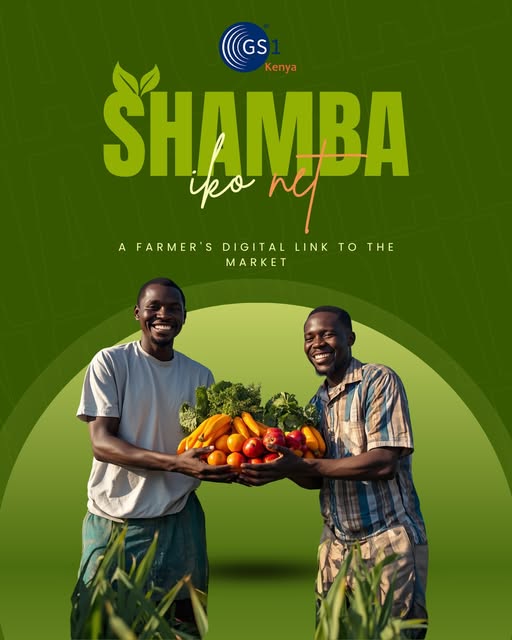

In an interview with The Tracker Media, Rhodah Mwose, who is in charge of SHAMBA ikoNET and the Agribusiness Centre of Excellence at GS1 Kenya, shares insights into the partnership’s vision of using digital traceability, agritourism and practical learning to strengthen Kenya’s agricultural value chain.
According to the World Health Organization (WHO), foodborne diseases pose a significant global public health challenge, underscoring the importance of food safety throughout the supply chain. As agricultural markets become increasingly demanding, farmers need more than good produce to remain competitive. They must also demonstrate where their products come from, how they have been handled and whether the required safety and quality standards have been observed. For many smallholder farmers and agribusinesses, meeting these expectations calls for practical solutions that make traceability accessible and manageable.
It is this challenge that GS1 Kenya and Sonic Fresh Farm are seeking to address through a partnership to establish an agritourism and Agribusiness Centre of Excellence in Makueni County. The initiative aims to demonstrate how digital traceability, standards-based identification and good agricultural practices can be integrated into everyday farming while creating opportunities for training, research and knowledge sharing.

In an interview with Tracker, Rhodah, explained that the partnership is grounded in the growing need for verifiable information about agricultural products, particularly as international markets and regulators place greater emphasis on food safety and compliance.
The World Health Organization estimates that 600 million people fall ill from contaminated food every year, with 420,000 deaths globally. For agricultural exporters, inadequate documentation can also have significant commercial consequences. In Kenya, fresh vegetable export earnings declined from KSh 50.9 billion in 2023 to KSh 23.4 billion in 2024, with interceptions related to maximum residue limits identified as a major contributing factor.
Rhodah noted that farmers need practical ways to demonstrate how their crops are produced and handled, including records of crop protection product applications and compliance with pre-harvest intervals. When such information is missing or difficult to verify, farmers can face challenges meeting market requirements, potentially putting valuable business opportunities at risk.
Rather than approaching traceability solely as a technical or regulatory requirement, the partnership seeks to demonstrate its value in a working farm environment. The idea is to allow farmers and other agricultural stakeholders to see how digital records and good agricultural practices work together, learn from the experience and adapt the approach to their own operations.
Turning a Working Farm into a Learning Centre
At the heart of the initiative is Sonic Fresh Farm in Makueni County, which will serve as a demonstration site for digital traceability and modern agribusiness practices. According to Rhodah, the farm currently relies largely on manual record-keeping, with books used to document spray intervals, agronomist visits and farm worker registration. Stock is monitored using Excel spreadsheets, while packhouse processes are documented on paper.
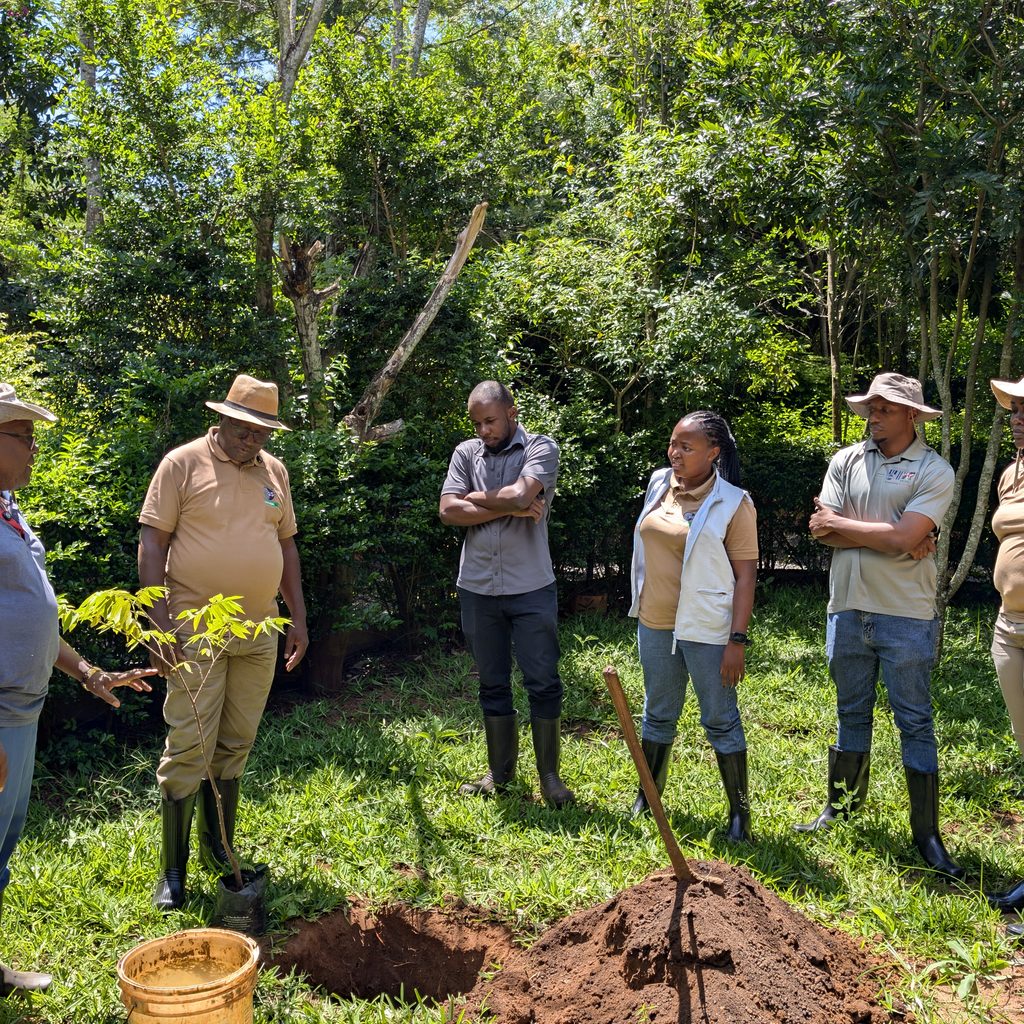
The introduction of https://shambaikonet.com/ is intended to bring these activities into a more coordinated digital system, improving how farm information is captured, organised and accessed. This will provide a practical example of how technology can support farm management while making relevant production records easier to retrieve and verify.
However, the vision extends beyond digitising farm operations. The partnership also places agritourism and experiential learning at the centre of the initiative. The farm will provide a setting where farmers, students, researchers, agribusiness operators and other visitors can observe agricultural processes, participate in training and learn how traceability connects production to the marketplace.
Rhodah explained that the different components are intended to complement one another. Agritourism will open the farm to visitors, while students will have opportunities to conduct research and learn from actual farm operations. Sonic Fresh Farm will also aggregate produce and serve as a reference point for visitors seeking to understand how production, post-harvest handling and market preparation are linked.
Through structured training sessions, demonstrations and stakeholder engagement forums, the initiative will extend these lessons beyond the farm to surrounding communities and institutions. The aim is to create a learning environment in which agricultural stakeholders can gain practical skills and explore solutions relevant to their own supply chains.
Connecting Agricultural Products to the Market
A key part of the initiative is the application of GS1 Standards to improve identification and traceability across the agricultural value chain. These standards provide a common framework for identifying products, locations, shipments, assets and related records, helping different participants in the supply chain exchange information more consistently.
As Rhodah explained to The Tracker, the system will use Global Location Numbers (GLNs) to identify the farm, production blocks and specialised sections, while Global Trade Item Numbers (GTINs) will identify produce trade items. Serial Shipping Container Codes (SSCCs) will identify logistics units and shipments, helping connect products to their movement through the supply chain.
Additional identifiers will support the identification of service relationships, equipment and documents. These include Global Service Relation Numbers (GSRNs), Global Individual Asset Identifiers (GIAIs) and Global Document Type Identifiers (GDTIs).
Information will be captured using GS1 barcodes and QR codes at different stages of production, from land preparation and planting through crop management, harvesting, post-harvest handling and dispatch. This approach is designed to connect records across the production process and provide a clearer account of a product’s journey.
The information will be managed through SHAMBA ikoNET and shared with relevant stakeholders through www.shambaikonet.com. Buyers and other authorised participants will be able to access relevant information to help them understand a product’s journey from the farm towards the market.
For farmers, this can support more organized record-keeping and make it easier to respond to requests for information about production practices and product handling. For aggregators and buyers, improved visibility can help strengthen coordination and confidence in the supply chain.
The initiative therefore seeks to demonstrate that traceability is not simply about scanning a barcode. It involves connecting identification with reliable data capture and information sharing so that relevant stakeholders can access the information they need.
From Implementation to Measurable Impact
According to Rhodah, the initiative will be implemented in four phases, beginning with the partnership agreement, site assessment and digital mapping of the farm. The second phase will involve deploying the system, including assigning identifiers and introducing QR codes. Training, pilot testing and a live demonstration will follow, before the initiative moves into learning visits and broader engagement with the agricultural sector.
The expected outcomes include stronger export readiness, improved food safety and quality assurance, new skills and employment opportunities, and better coordination among producers, aggregators and buyers.
Progress will be assessed using practical indicators, including the number of farm blocks and sections mapped, the number of farmers and staff trained, the number of products traceable from farm to market, and the number of learning visits conducted.
These measures will help the partners evaluate the initiative’s reach and identify areas for improvement as the model develops. They will also provide a basis for assessing whether the Centre of Excellence is helping farmers and other stakeholders understand and adopt standards-based traceability.
Building a Model for Wider Adoption
Looking ahead, the ambition is for Sonic Fresh Farm to become a reference site that other farms, schools, community groups and agribusinesses can visit to learn how the approach works in practice.
Rhodah told The Tracker that the long-term vision is to sustain demonstrations and training for different audiences while engaging institutions and development partners to encourage wider adoption. Stakeholders will be able to study the model, learn from its implementation and adapt it to their own farms and supply chains.
Watch the partnership in Action
What does the future of traceable and sustainable agriculture look like? Watch the video below for a closer look at the partnership between GS1 Kenya and Mailu, and how collaboration, technology and GS1 Standards can help strengthen agricultural value chains and build trust from farm to market.
Video link: https://www.youtube.com/watch?v=DXIOC8Ynv0M
The partnership between GS1 Kenya and Sonic Fresh Farm brings together digital technology, practical agricultural learning and agritourism in an effort to address the challenges facing modern agriculture. By creating a space where traceability can be demonstrated in real operating conditions, the initiative aims to make the concept more accessible to farmers and agribusinesses.
Ultimately, the Centre of Excellence is intended to contribute to an agricultural sector in which reliable records, product identification and traceability become part of everyday practice. As Kenya continues to pursue opportunities in regional and international markets, such approaches can help farmers strengthen their ability to demonstrate compliance, build trust with buyers and improve the visibility of their products from farm to market.
Source: World Health Organization (WHO). Food safety. 4 June 2026. Available at: https://www.who.int/news-room/fact-sheets/detail/food-safety
By Mkulima Harvest


