

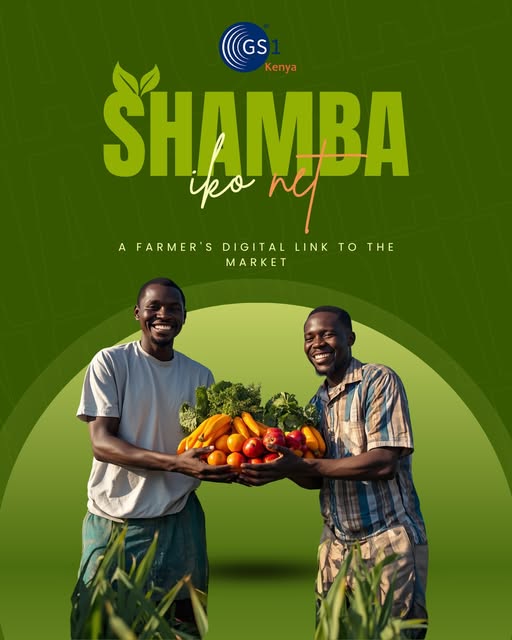
Shamba ikoNET is helping growers prove where their produce comes from, and buyers are taking notice.

A crate of avocados leaves a farm in Murang’a and passes through a collection point, a truck and a packhouse before reaching a shelf. If it arrives damaged or fails a buyer’s checks, who is responsible? In much of Kenya’s produce trade, nobody has been able to say for sure.
Traceability closes that gap. It means following a product from the farm to the buyer and back again, so that anyone along the chain can see who grew it, where it was grown and how it travelled. Global buyers increasingly expect this information, and local buyers are starting to ask for it too.
What Shamba ikoNET does
Shamba ikoNET is a digital platform from GS1 Kenya that connects farmers, agribusinesses and buyers using globally recognised GS1 standards. Buyers can verify the quality and origin of what they are buying, while farmers gain direct access to markets. It offers three main tools:

- A verified digital identity for farmers, so buyers know who they are dealing with.
- GS1-compliant barcodes on products, which allow a product to be traced from the farm to the market.
- Digitised production and harvest data, which helps farmers make better decisions and can support applications for financing and certification.
The platform is open to smallholder farmers and cooperatives, not only large exporters.
Better quality
When a batch fails, a traceable record lets everyone work backwards to the farm, the harvest date or the storage stage. Farmers who record their inputs and harvests can also see which practices work best and repeat them. Buyers, in turn, can reward consistent suppliers instead of gambling on every delivery.
Less waste
Traceability cannot stop produce from spoiling, but it shows where the damage happens. If losses keep appearing at one collection point or on one stretch of transport, that weak link can be fixed. Direct connections between farmers and buyers help too, since fewer middlemen means fewer handovers and fewer chances for things to go wrong.
More trust
For exporters, traceability is increasingly the price of entry. It helps farmers build credibility, become more visible to buyers and open the door to new markets. The same applies at home: a supermarket or hotel buyer in Nairobi wants to know the produce is safe and who grew it. A documented history also gives a smallholder proof of reliability, which can strengthen applications for credit and certification.
The challenge
The system only works if farmers have the phones, training and habit of recording accurate information, and if buyers and packhouses actually use it. Good technology still depends on good data.
Kenya’s farmers have never lacked good produce. What many have lacked is a way to prove it. With platforms like Shamba ikoNET, every farm can have a story that a buyer can check with a scan.


