

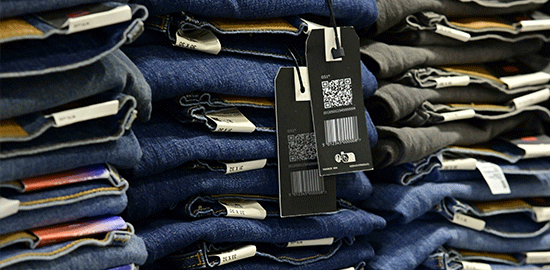

From a garment’s first stitch to the moment it reaches a customer, GS1 Standards can give apparel products a digital identity that supports visibility, efficiency, traceability and trust.
A jacket hanging on a retail rack may appear to be just one product. Behind it, however, could be dozens of different combinations of size, colour and fit.
A medium black jacket is different from a large black jacket. The same jacket in blue is another variation altogether. For a manufacturer or retailer managing thousands of garments, keeping track of these differences accurately can quickly become complex.

This is where GS1 Standards come in.
GS1 Standards provide a common language for identifying products, locations and other entities across the supply chain. In apparel, this means giving each product variation a unique identity and enabling businesses to connect that identity to accurate product information as the garment moves from manufacturing to distribution, retail and ultimately the consumer.
For Kenya’s apparel industry which spans manufacturers, exporters, fashion brands, retailers, designers and an expanding digital commerce ecosystem — understanding the role of standards could open new opportunities for efficiency and transparency.
Giving every garment a unique identity
At the heart of GS1 Standards is identification.
A GTIN (Global Trade Item Number) provides a unique identity for a trade item. In apparel, individual product variations such as size, colour or style can be uniquely identified.
This may sound simple, but it can make a significant difference to how businesses manage their products.
Instead of relying on product descriptions that may differ between systems, a unique identifier provides a consistent reference that can be recognised across business systems and trading partners.
For an apparel business, this can help create a more organised product catalogue and reduce confusion when managing multiple product variations.
One product identity, many business systems
An apparel product does not exist in only one place.
Information about it may be held by the manufacturer, warehouse, distributor, retailer, e-commerce platform and logistics provider.
When each business uses different ways of identifying and describing products, information can become inconsistent.
GS1 Standards help create a shared language.
A product can retain its unique identity as it moves through different systems and trading relationships. This creates a foundation for businesses to exchange more accurate information and improve visibility across the supply chain.
For Kenyan apparel businesses supplying multiple retailers or selling through online marketplaces, this interoperability can be particularly valuable.
Making inventory more visible
For apparel retailers, inventory management is closely linked to product identification.
Knowing exactly which products are available, in which sizes and colours, and where they are located can support better stock management.
GS1 Standards can help businesses establish a more structured approach to identifying products and locations.
With GLNs (Global Location Numbers), for example, businesses can identify locations such as warehouses, stores and other relevant points within the supply chain.
When product and location identification work together, businesses can build greater visibility into where products are and how they move.
This can support more efficient replenishment, order fulfilment and stock management.
Bringing accuracy to online fashion
The growth of e-commerce is changing how consumers discover and purchase apparel.
A customer shopping online cannot physically examine a garment before purchasing it. Instead, the decision may depend on the accuracy and completeness of the information displayed on the screen.
Size, colour, material, care instructions and other product attributes all contribute to the customer’s purchasing decision.
Accurate product identification provides a foundation for managing this information consistently across different channels.
For Kenyan fashion brands moving from physical stores into e-commerce, marketplaces or regional markets, GS1 Standards can therefore support the transition by helping them establish structured and consistent product information.
Beyond the traditional barcode
When many people think about GS1 Standards, they think of the familiar barcode.
But standards are about much more than the lines printed on a product.
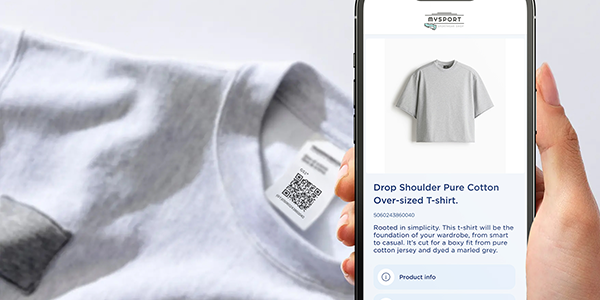
The industry is increasingly moving towards 2D barcodes, including QR codes powered by GS1 standards, which can carry or provide access to significantly more information than a traditional one-dimensional barcode.
For apparel, this creates new possibilities.
A product could be connected to information such as its materials, care instructions, origin, authenticity information or sustainability-related data, depending on the business model and information made available by the brand.
This creates a bridge between the physical garment and its digital identity.
A consumer does not simply see a shirt. They can potentially interact with information connected to that shirt.
Supporting traceability from source to consumer
Traceability is another area where GS1 Standards can play an important role.
For an apparel business, understanding the journey of a product can involve multiple stages and trading partners.
Where were the materials sourced? Where was the garment manufactured? Which facility handled it? Where was it distributed? Which retail location received it?
GS1 Standards provide the identification foundation for answering these questions by uniquely identifying products, locations and supply-chain events.
The result is greater visibility across the product journey.
For Kenya, where apparel businesses participate in both domestic and international supply chains, stronger traceability can help businesses respond to growing expectations for transparency and responsible sourcing.
Preparing for a more circular fashion industry
The conversation around fashion is increasingly moving beyond production and sales towards what happens to products after their first use.
Garments can be repaired, resold, reused, donated or recycled.
But these activities require information.
Knowing what a garment is, what it is made from and other relevant product details can make it easier for businesses and consumers to determine what can happen to the product at the end of its first life.
A reliable digital identity can therefore support emerging circular models by keeping useful product information connected to the garment.
For Kenyan businesses exploring opportunities in resale, repair and textile recycling, standards can provide part of the digital infrastructure needed to make these models more scalable.
Building consumer trust
For fashion brands, trust is part of the product.
Consumers want confidence that the product they purchase is what it claims to be. Retailers want accurate information from their suppliers. Trading partners need reliable data to conduct business efficiently.
Standards can help establish consistency across these interactions.
When a product has a unique identity and is linked to trusted information, businesses have a stronger foundation for managing product data and communicating with their customers.
This can also support initiatives around product authentication and the fight against counterfeit goods.
What can Kenyan apparel businesses do?
The adoption of GS1 Standards does not have to be viewed as a major technological transformation that happens overnight.
It can begin with the basics: uniquely identifying products and ensuring that the information associated with those products is accurate and consistent.
From there, businesses can explore how standards can support inventory management, logistics, e-commerce, traceability, consumer engagement and circularity.
For a Kenyan apparel manufacturer, this could mean ensuring every size and colour variation has the correct identification.
For a fashion retailer, it could mean improving product data and inventory visibility.
For an online fashion business, it could mean establishing consistent product information across sales platforms.
And for a brand preparing for greater transparency and circularity, it could mean laying the groundwork for a digital identity that stays connected to the product beyond the point of sale.
Fashion needs more than a label
The future of apparel is increasingly digital.
As products move across physical and digital marketplaces, businesses need more than labels that tell consumers what a garment is. They need systems that allow products to be identified, located, tracked and connected to reliable information.
That is the opportunity presented by GS1 Standards.
For Kenya’s apparel industry, adopting these standards is not simply about adding a barcode to clothing. It is about creating a common language that can connect manufacturers, retailers, logistics providers, marketplaces and consumers.
Every garment has a story. GS1 Standards can help give that story a reliable identity — from the factory floor to the retail shelf and beyond.


