



By Smart construction
Last week, we explored how GS1 Standards can support smarter construction through improved scheduling, resource allocation and on-site productivity. But efficiency is only one part of building smarter. A truly smart construction project must also ensure that the materials and products entering a site are safe, compliant, authentic and traceable.
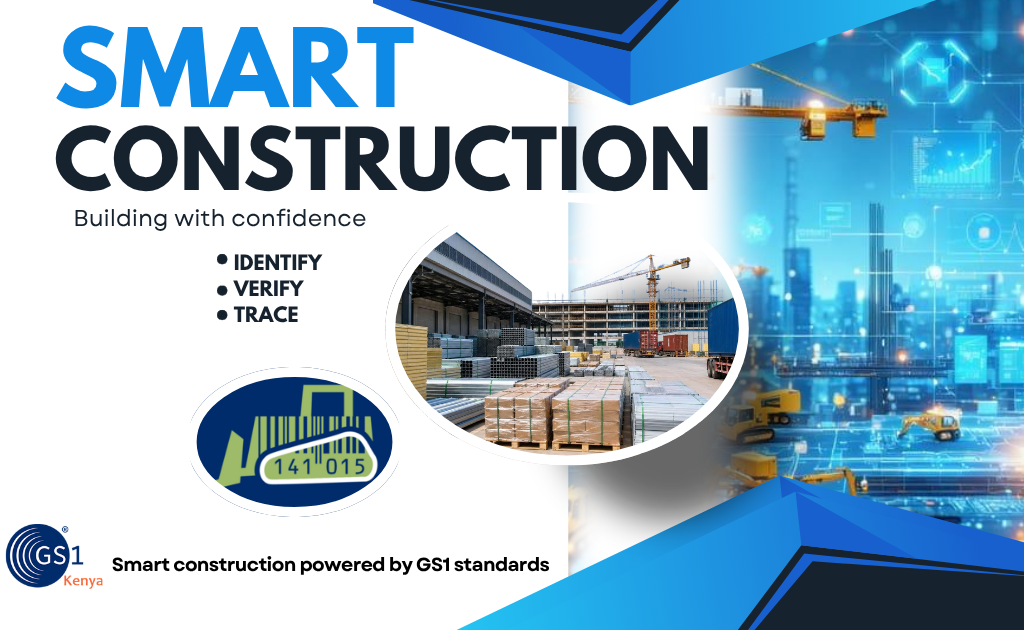
In construction, every material has a role to play in the safety and performance of a building. From steel and cement to electrical components, plumbing systems and finishing materials, products must meet the required regulatory and safety standards. Yet as construction supply chains become more complex, verifying where materials come from, whether they are genuine and whether they meet the required specifications can become a challenge. This is where GS1 Standards can provide a foundation for greater visibility and accountability.

By giving products and other supply chain entities unique and globally recognised identities, GS1 Standards help create a common language for identifying and sharing information. A product can be identified using a Global Trade Item Number (GTIN), while locations such as manufacturers, warehouses, construction sites and suppliers can be identified using a Global Location Number (GLN). This creates a digital link between a physical product and information about it, making it easier for stakeholders to know exactly what a product is, who supplied it and where it has been.
Imagine a construction project receiving thousands of materials from different suppliers. Instead of relying solely on paperwork or manual records, each product can be scanned and its information captured digitally. This can help project teams verify products against approved specifications, improve receiving processes and maintain more accurate records of materials used on site. Where additional information is available through data carriers such as QR codes powered by GS1 standards, stakeholders can access relevant product information more easily throughout the product’s journey.
This visibility becomes particularly important when it comes to compliance and safety. Standardised identification can support better documentation of products, certifications, specifications and other relevant information, helping businesses establish a stronger chain of evidence around the materials they use. It can also make it easier to identify affected products if a safety issue, defect or recall occurs, enabling faster and more targeted action rather than having to search through disconnected records.
Beyond compliance, GS1 Standards can strengthen supply chain transparency. Construction involves multiple players from manufacturers and distributors to contractors, suppliers and site teams and materials can pass through several stages before reaching their final point of use. With standardised identification and data sharing, stakeholders can improve visibility across these movements, creating a clearer picture of what was supplied, by whom, where it went and when it was used.
Ultimately, smart construction is not just about completing projects faster or using resources more efficiently. It is about creating projects where the right product is used, in the right place, with the right information available at the right time. By connecting physical products to trusted digital information, GS1 Standards can help construction stakeholders move towards supply chains that are more transparent, compliant and safety-focused.
From efficiency to safety, compliance and transparency, the future of construction is increasingly connected and better data is helping build the foundation.


