


In a world where consumers can access information with a simple scan, knowing where that information comes from matters. The recent online conversation sparked by a barcode scan highlights the need for consumers to use the right platforms when checking product information. From Hakikisha Bidhaa to the growing adoption of 2D QR codes, product identification is evolving to give consumers greater access to trusted information, transparency and confidence in what they buy.
A simple barcode scan recently sparked a wave of conversation online after a consumer used a visual search tool to find information about a product. What appeared to be an innocent attempt to establish the identity of the product left many people questioning what they were seeing on their screens.
The incident raises an important question for today’s digitally connected consumer: When you scan a barcode, are you getting the right product information?

Our smartphones have made it easier than ever to search, scan and discover information. But not every scanning tool is designed for the same purpose. A visual search tool may identify an image, recognise an object or return information from across the open web. The results may be useful, but they are not necessarily a verified product record.
This is where using the right platform matters.
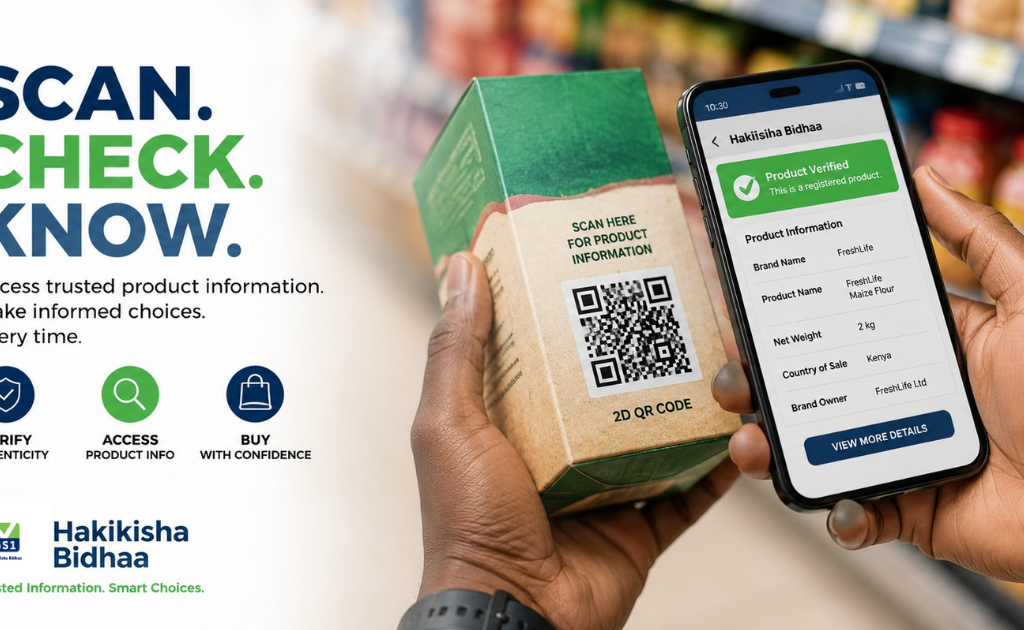
For consumers looking to access trusted product information, http://hakikisha bidhaa provides a platform through which product identity can be checked using the product’s Global Trade Item Number (GTIN). The platform is designed to provide accurate product attributes, including the brand owner, brand name, product description, net weight, unit of measure, country of sale and product image.
In simple terms, the barcode is the identifier; the platform provides the information behind that identifier.
Making Product Information Accessible
Hakikisha Bidhaa is helping create a more connected product ecosystem by making product information accessible to consumers, retailers, distributors and regulators.
For brand owners, the platform provides a self-service mechanism to upload and maintain product identity information. Retailers can then query the GTIN on the registry to verify the identity of a product before it reaches the consumer.
This creates a more reliable flow of information between the brand owner, the supply chain and the consumer.
For retailers, this can support product verification and help identify discrepancies in product information, while contributing to efforts to keep counterfeit or incorrectly identified products from reaching the shelves.
For consumers, it means having access to product information that can support more informed purchasing decisions.
The Barcode Is Evolving
But product identification is not stopping with the traditional barcode.
The industry is moving towards 2D barcodes, including QR-based solutions, as part of the global transition towards richer, more connected product information.
Unlike traditional one-dimensional barcodes that primarily carry an identifier, 2D barcodes can connect consumers to additional digital information. Depending on how they are implemented, they can provide access to product details, traceability information, expiry dates, recalls, sustainability information and other digital content.
This evolution presents an exciting opportunity for brands to communicate more directly with consumers while giving consumers greater visibility into the products they purchase.
Imagine picking up a product, scanning its 2D barcode with your smartphone and being able to access useful information about that product within seconds.
That is where the future of product identification is heading: from simply identifying a product to creating a digital connection between the product, the business and the consumer.
Don’t Just Scan. Check.
As consumers become increasingly dependent on their smartphones for information, knowing where and how to scan becomes just as important as having the technology to scan.
A search engine can help you find information. A visual search tool can help you identify what you see. But when you want product identity information, you should use a platform designed to provide and verify that information.
That is why consumers should embrace platforms such as Hakikisha Bidhaa or http://verified by gs1 and learn to make use of 2D barcodes as they become increasingly common on products.


