



In the fast-growing world of online shopping, having a great product is no longer enough. A brand can have an innovative product, attractive packaging and a compelling story, yet remain invisible to consumers navigating crowded online marketplaces.
For emerging brands, particularly small and growing businesses, the challenge is twofold: how do consumers find your product, and once they do, how do they know they can trust it?
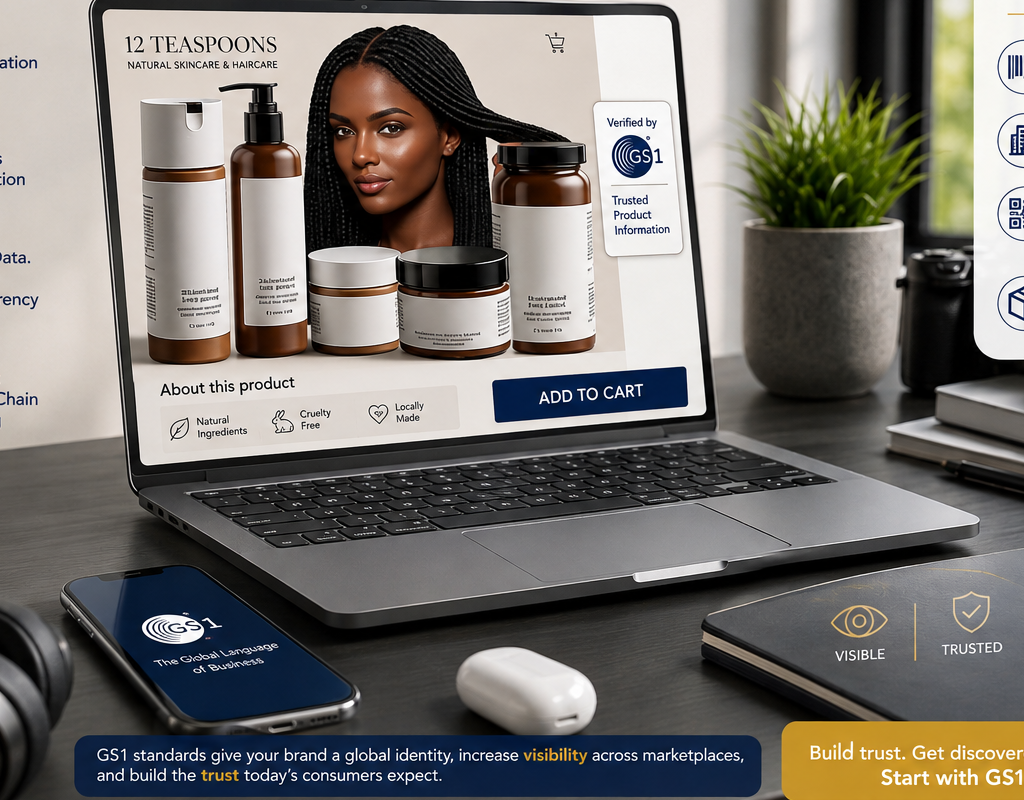
The story of 12 Teaspoons, a South African natural skincare and haircare brand, offers an important lesson. Its journey shows how a seemingly simple standard—the GS1 barcode and its unique Global Trade Item Number (GTIN)—can help a growing brand build a stronger digital identity, improve visibility and prepare for opportunities in online and retail marketplaces.

In the digital marketplace, every product needs an identity
In a physical shop, consumers can pick up a product, read the label, examine the packaging and compare it with other items on the shelf. Online, that physical experience disappears. The consumer instead relies on digital information, including the product name, image, description and other details provided on a marketplace or search platform. This makes accurate product identification increasingly important.
For 12 Teaspoons, GS1 standards provided the brand with a recognised way to identify its products. Each product could be assigned a unique GS1 GTIN—the number encoded in a barcode which acts as a digital identifier for that specific product.
That identity matters because online marketplaces need to distinguish one product from another. Without a standardised identifier, product information can be duplicated, confused or incorrectly associated with another brand. A GS1 GTIN creates a consistent product identity that can follow a product across different channels, from a brand’s own website to online marketplaces and physical retail. It helps ensure that the product being listed digitally is connected to the brand that owns it.
Visibility begins with being identifiable
The internet is a crowded marketplace. Millions of products compete for attention, and consumers often discover products through marketplace searches, search engines and digital catalogues before they ever visit a brand’s website.
For smaller brands such as 12 Teaspoons, visibility therefore depends on more than marketing. It also depends on whether the product can be accurately identified and understood by the digital systems that organise online commerce. GS1 identifiers give products a common language for these systems.
A GTIN can support more consistent product listings and reduce confusion caused by duplicated or inconsistent product information. Standardised product identification can also support online discoverability and help brands meet the requirements of increasingly sophisticated marketplaces.
This is particularly important for African brands seeking to grow beyond local markets. A unique, globally recognised product identity creates a foundation for selling through multiple channels without having to reinvent how each product is identified every time the business enters a new marketplace.
For 12 Teaspoons, the barcode was therefore not simply something to print on packaging. It became part of the brand’s journey towards greater market readiness and digital visibility.
Trust matters even more when consumers cannot touch the product
Online shopping requires consumers to make decisions from a distance. They may have never heard of the seller, seen the product in person or interacted directly with the brand. Trust therefore becomes the bridge between discovery and purchase.
This is where trusted product identification becomes valuable. A GS1 GTIN is designed to uniquely identify a product and is issued through the GS1 system. Product and company information can also be checked through GS1’s verification services, helping marketplaces and other users confirm that a product identifier is associated with the correct brand and product.
For consumers, this can translate into a more confident buying experience. Accurate identification helps reduce uncertainty about what is being purchased and whether the product information presented online matches the product being offered.
For brands, trusted identification can help protect their identity in an increasingly complex digital marketplace. The lesson from 12 Teaspoons is therefore larger than one brand’s success. Visibility and trust are becoming two sides of the same digital commerce strategy. A product must first be accurately identified to become part of a reliable digital ecosystem, and trusted information helps consumers and marketplaces engage with that product with greater confidence.
What online marketplaces can learn
The growing importance of GS1 standards is also visible at the marketplace level. In South Africa, Takealot has integrated Verified by GS1 into its Seller and Supplier Portals to help validate GTINs before products are listed. The approach is designed to improve product data accuracy, strengthen seller accountability and give consumers greater confidence in the products they encounter online.
This creates an important opportunity for both sides of the marketplace. For the marketplace, verified product information can contribute to more accurate product catalogues, fewer duplicate or incorrect listings and greater transparency. For brands and sellers, it can support a recognised product identity, more accurate listing processes and greater readiness to sell across different channels.
This is the direction in which online commerce is moving. Marketplaces are increasingly becoming not just places where products are uploaded, but trusted digital ecosystems built around reliable product data.
The opportunity for African brands
The digital marketplace offers African businesses an unprecedented opportunity to reach consumers beyond traditional geographical boundaries. A small business can now sell from one country while reaching customers across a region or even internationally.
However, growth creates a new challenge: how can the brand ensure that its identity and product information remain consistent wherever the product appears?
This is where standards become strategic. For a growing business, adopting GS1 standards early can help establish a strong foundation for expansion. A unique GTIN gives each product a recognised identity, while structured and accurate product information can help brands communicate consistently with marketplaces, retailers and consumers.
GS1 standards can also support a future where products are not simply displayed online but are verifiable, traceable and connected to richer information. For African entrepreneurs, this means that standards should not be viewed merely as a compliance requirement for entering a large retailer or marketplace. They can be part of a broader digital growth strategy.
Building visibility and trust in online marketplaces
The experience highlighted by 12 Teaspoons points to an important lesson for brands seeking to succeed online. Every product needs a unique and trusted identity, and GS1 GTINs can help ensure that products are consistently and uniquely identified across different channels.
However, the barcode alone is not enough. The data connected to the product including the brand, product name, description and other attributes must be accurate and consistently maintained. As marketplaces become more dependent on reliable product information, brands that organise and manage their data early will be better positioned to meet marketplace requirements and grow across multiple sales channels.
Trust must also become part of the digital customer experience. Today’s consumers increasingly want to know what they are buying, who made it and whether the information they see can be trusted. Verified and accurate product data can therefore become an important part of how consumers experience a brand.
For businesses with ambitions beyond a single marketplace, adopting globally recognised standards can create a foundation for growth. A product identity based on GS1 standards can support a brand’s movement between online marketplaces, physical retail and other channels as the business expands.
From being online to being trusted online
The story of 12 Teaspoons is ultimately a reminder that being present online is not the same as being visible, and being visible is not the same as being trusted.
In a marketplace filled with competing brands, visibility starts with making products understandable to digital systems. Trust grows when consumers and marketplaces can rely on accurate, consistent and verifiable information.
For 12 Teaspoons, GS1 standards helped create a stronger foundation for market access and digital readiness. For other brands, the lesson is clear: the path to greater online visibility may begin with something as simple as a barcode, but the opportunity goes much further.
As online marketplaces across Africa and the world continue to grow, the brands that stand out may increasingly be those that can answer the most fundamental digital commerce questions with confidence: What is this product? Who owns it? Can the information about it be trusted?
GS1 standards provide one important foundation for answering these questions, helping brands, marketplaces and consumers speak the same language.
This article is inspired by and adapted from the GS1 case study on 12 Teaspoons: Building confidence and market access through trusted GS1 barcodes. The case study demonstrates how the South African brand used GS1 standards to support business growth, product identification and marketplace readiness.
Readers can explore the original story through the link below:
https://www.gs1.org/insights-events/case-studies/12-teaspoons-building-confidence-and-market-access-through-trusted-gs1-barcodes: From a Shelf in South Africa to the Digital Marketplace: How GS1 Standards Help Brands Become Visible and TrustedSource: GS1, 12 Teaspoons Case Study.


