


By Tech Nova
For more than 50 years, the humble barcode has quietly powered global commerce. It appears on supermarket shelves, medicine packages, spare parts and thousands of everyday products, enabling businesses to identify goods quickly as they move through increasingly complex supply chains. From the checkout counter to the warehouse, the barcode has become one of the most recognisable technologies in the modern economy.

Now, it is undergoing a major technology upgrade.
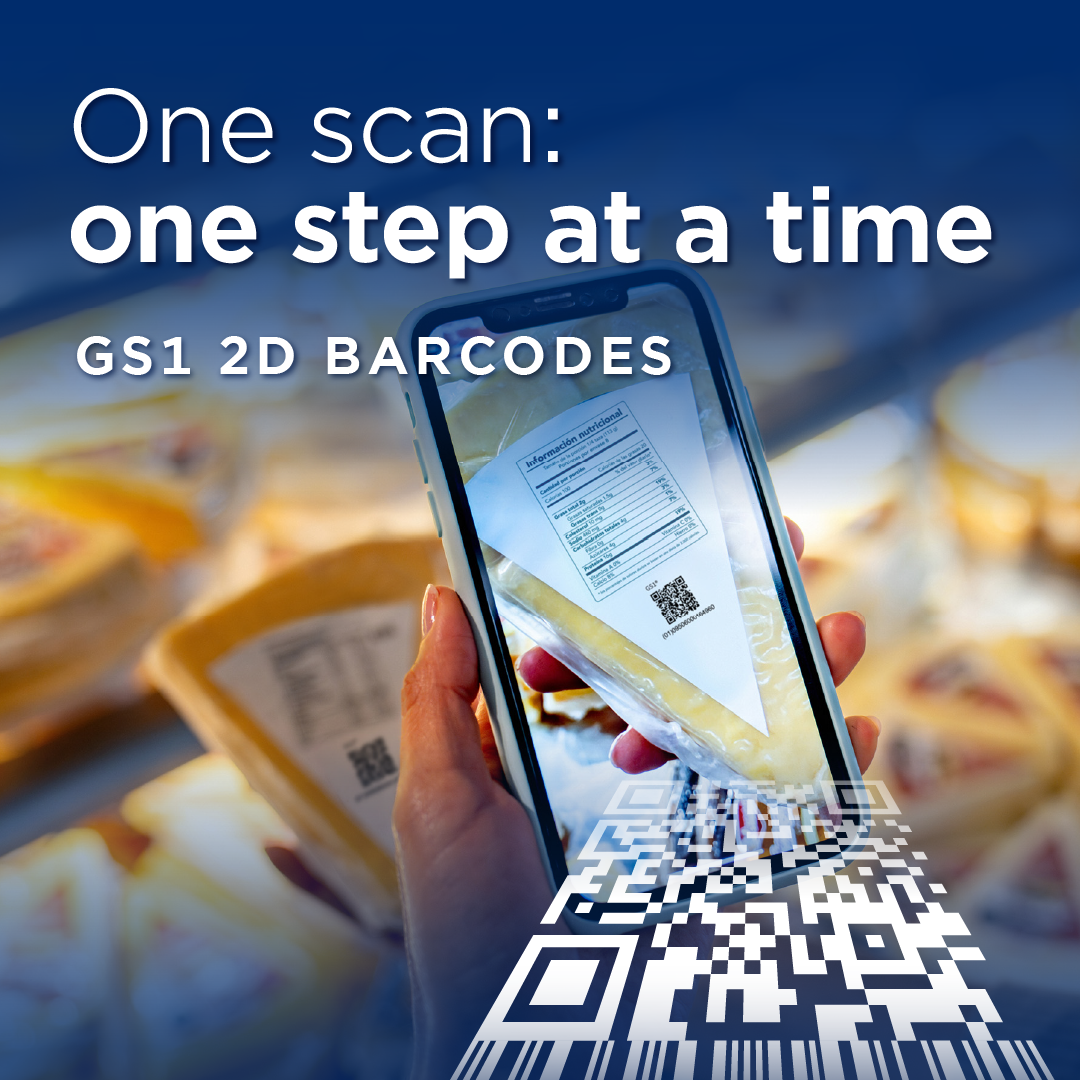
The next generation of product identification is moving beyond traditional one-dimensional barcodes towards two-dimensional (2D) codes, including QR codes powered by GS1 Digital Link and GS1 DataMatrix. Unlike traditional barcodes, these new codes can carry or connect users to much richer information, including batch numbers, serial numbers, expiry dates and additional digital product information.
The implications extend far beyond the supermarket checkout.
A traditional barcode primarily answers one simple question: What is this product? A 2D barcode can help businesses and consumers answer several more. Which batch does it belong to? When does it expire? Where can a consumer find additional information about it? If a recall occurs, how can a retailer quickly identify the affected products?
This shift matters because modern supply chains are increasingly dependent on accurate, real-time and connected information. The product is no longer simply something that moves from one business to another. Increasingly, it is becoming a carrier of data.
Through its Sunrise 2027 initiative, GS1 is supporting the global transition towards 2D barcodes and encouraging retailers to prepare their point-of-sale systems to scan and process them. The technology represents more than a new-looking barcode on a package. It signals a broader shift towards connected products, richer data and more intelligent commerce.
For African businesses, the opportunity could be particularly significant. Many supply chains involve manufacturers, distributors, wholesalers, retailers and a growing number of formal and informal trading channels. In such environments, visibility can be difficult when product information is fragmented across different systems. A product with a standardised digital identity can potentially become a trusted data point that travels with it throughout the supply chain.
For a food manufacturer, this could support better batch-level traceability and more efficient recalls. For a pharmaceutical company, stronger product identification could support efforts to distinguish genuine products and improve the availability of accurate information. For retailers, richer product data could strengthen inventory management, reduce losses linked to expired products and make recall processes more precise.
Consumers also stand to benefit. Instead of relying only on information printed on often-limited packaging, a simple scan could provide access to additional product details, instructions, certifications, traceability information and other relevant digital content.
This is where the barcode begins to connect with one of the biggest technology conversations of the moment: artificial intelligence.
The most important part of the barcode revolution may not actually be the barcode itself. It is the quality of the data behind it. Artificial intelligence can analyse enormous volumes of information, but its usefulness depends heavily on the quality, structure and reliability of the data it receives. AI cannot create trust from inaccurate or poorly connected product information.
This makes standardised product identification increasingly important. GS1 identifiers provide a common way of identifying products, locations and logistics units, while GS1 Digital Link provides a means of connecting those identifiers to online information. In practical terms, the supply chain of the future could look less like a collection of disconnected databases and more like a network of digitally identifiable products.
For businesses, that could create stronger foundations for AI applications. Reliable product data can support better forecasting, inventory optimisation, demand analysis, supply-chain monitoring and recall management. As AI adoption grows, the organisations that have invested in clean and standardised data may be better positioned to turn technology into measurable business value.
The development is also closely connected to the growing conversation around Digital Product Passports. The European Union is moving towards an environment in which more information about products, including information related to sustainability, circularity and product characteristics, becomes digitally accessible. This is creating a future where a single product may carry a digital identity capable of supporting retail transactions, supply-chain traceability, consumer information and regulatory requirements.
For African manufacturers and exporters, this could become increasingly relevant. Businesses supplying global markets will need to pay closer attention to how product information is structured, shared and accessed. Digital product information is gradually becoming part of the wider infrastructure of global trade.
The transition, however, will not happen simply by printing QR codes on packaging. Retailers will need scanners and point-of-sale systems capable of processing the new data. Manufacturers will need systems that can generate, manage and maintain accurate product information. Supply-chain partners will need technology and processes that allow information to move seamlessly across the value chain.
This is where the real transformation lies.
The 2D barcode may be the visible part of the change, but the real engine sits behind it in the data infrastructure. The code is only as useful as the information, systems and processes connected to it.
For African retailers, brand owners and technology leaders, there are four important areas to watch. The first is traceability. Better product-level information can strengthen the ability to know what product moved where and when. The second is automation. Richer product data can feed inventory, warehouse, retail and analytics systems, reducing manual processes and improving decision-making. The third is consumer transparency. A scan can become an entry point to useful product information rather than simply a checkout transaction. The fourth is AI readiness. Businesses with clean, connected and standardised product data will have a stronger foundation for using AI to forecast, optimise and make informed decisions.
GS1 Kenya’s 2026 Traceability Week placed these developments within a wider technology conversation, exploring how AI, connected data and GS1 standards can support sectors such as healthcare, retail, agribusiness and digital trade. The growing importance of the 2D barcode demonstrates how these technologies are increasingly becoming connected rather than operating in isolation.
The bigger lesson is that digital transformation does not always arrive in the form of a spectacular new application.
Sometimes, it arrives quietly, printed on the packaging of products we already buy.
The original barcode transformed commerce by giving products a machine-readable identity. The 2D barcode is taking that idea one step further by giving products a connected digital identity. As the GS1 Sunrise 2027 milestone approaches, the question for businesses is no longer simply whether they can print a QR code on a package.
The more important question is whether their technology, data and business systems are ready to turn that code into useful, trusted and actionable information.
For Africa’s manufacturers, retailers, brand owners, logistics companies and technology providers, the shift towards 2D barcodes could be one of the most important — and perhaps least understood — technology transitions currently taking place in commerce and the supply chain.
Why the 2D Barcode Matters to Retailers and Brand Owners
The transition is already gaining momentum, and understanding what it means now will help businesses prepare for the changes ahead. Watch the video below to see why the move to 2D barcodes matters for retailers and brand owners, and how the technology is shaping the future of product information, consumer engagement and connected commerce.
🎥 https://bit.ly/4jkdm72


