

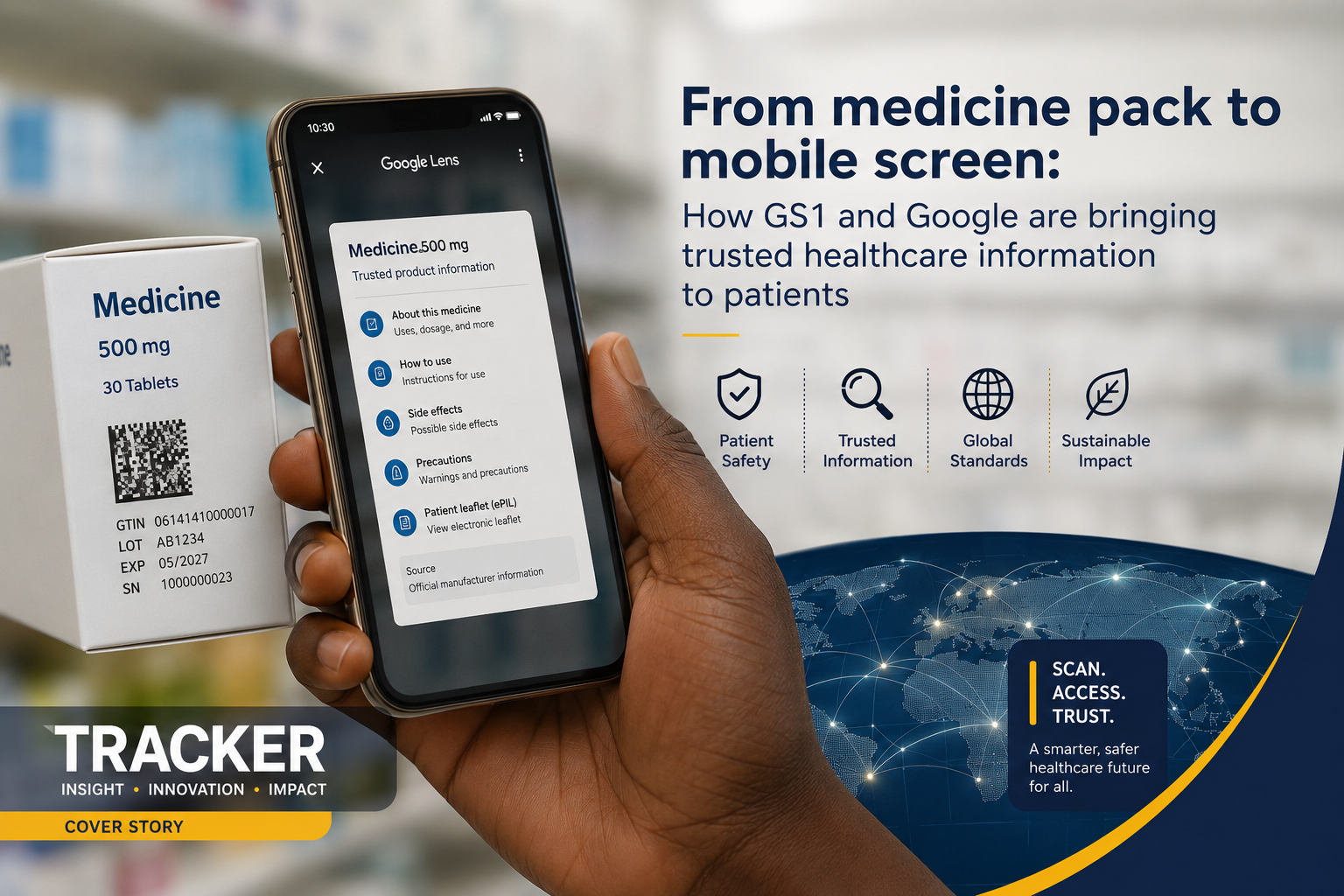
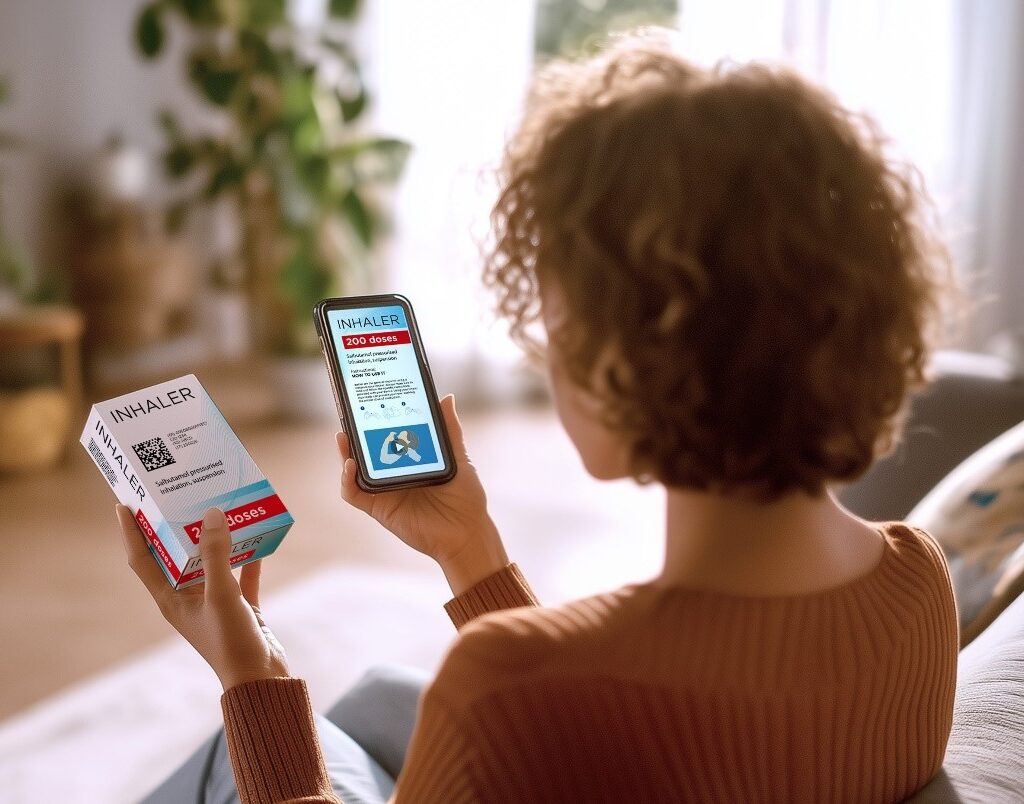

A small square of black-and-white markings on a medicine pack may soon become much more than a tool for identifying a product. With a smartphone camera, it could become a gateway to trusted, digital healthcare information putting critical product details directly into the hands of patients, caregivers and healthcare professionals.
This is the promise behind a new collaboration between GS1 and Google that enables GS1 DataMatrix barcodes on medicines to be recognised through Google Lens. The development represents an important step in connecting the physical and digital worlds of healthcare and could fundamentally change how people access information about the medicines they use.
The announcement, made in November 2025, builds on more than two decades of healthcare digitalisation through GS1 standards. GS1 DataMatrix is already used on millions of medicine packs globally, encoding essential information such as the product identifier, batch or lot number, expiry date and, where applicable, a unique serial number. The technology is already recommended or required by healthcare regulations in more than 70 countries. What is changing is the accessibility of that information.

With smartphone recognition through Google Lens, patients and healthcare professionals can scan the existing GS1 DataMatrix on a medicine pack and access trusted product information, including electronic patient leaflets (ePILs). Rather than searching the internet for information about a medicine and trying to determine whether the source is reliable, the barcode becomes a direct bridge between the physical product and its digital information.That seemingly simple scan has potentially far-reaching implications.
Turning a barcode into a healthcare information gateway
Healthcare is an industry where information is not simply useful it can be critical to safety.
A patient may need to know how a medicine should be taken, understand important instructions, check product information or access the latest approved leaflet. A healthcare professional may need accurate product information while dispensing or administering treatment. Manufacturers and regulators, meanwhile, need reliable identification and traceability throughout the supply chain.
GS1 DataMatrix provides the identification foundation for these requirements. Unlike traditional one-dimensional barcodes, it can contain multiple pieces of structured information within a small space, including the Global Trade Item Number (GTIN), batch or lot number, expiry date and serial number.
The significance of the GS1-Google collaboration is therefore not simply that smartphones can now “read a barcode”. It is that an identification standard already embedded in healthcare supply chains can become more accessible at the point where it matters most the patient.
This moves healthcare closer to a model in which the physical medicine and its digital identity are connected.
Why this matters for patient safety
Counterfeit, falsified and substandard medicines remain a major challenge for healthcare systems, particularly where supply chains are complex and visibility is limited.
Traceability helps stakeholders understand where a product has come from, where it has been and where it is going. In healthcare, this can support more effective recalls, improve inventory visibility and help prevent falsified products from reaching patients. GS1 identifies traceability as a foundation for ensuring that the right medical product reaches the right patient, at the right time and in the right quantity. The smartphone scanning capability adds another layer to this ecosystem: access to information.
Imagine a patient receiving a medicine and being able to scan the DataMatrix using a familiar device. Instead of relying solely on a printed leaflet, the patient could access the manufacturer’s digital information online, where available.
For healthcare professionals, the same digital connection could support faster access to product information and more accurate data capture. GS1 standards are already being used in healthcare to improve inventory management, clinical data capture, product recalls and point-of-care processes.
The innovation therefore represents a shift from simply identifying a medicine to creating a pathway for trusted information around that medicine.
A significant opportunity for Kenya
For Kenya, this development arrives at an important moment in the country’s healthcare digital transformation journey.
Kenya’s healthcare system is increasingly embracing digital technologies, electronic records, supply chain visibility and data-driven decision-making. Yet digital transformation is only as strong as the quality and interoperability of the data supporting it.This is where global standards become particularly important.
GS1 Kenya is promoting the adoption of GS1 standards in healthcare to strengthen patient safety, supply chain efficiency, visibility and traceability. GS1 DataMatrix can encode product information such as the GTIN, batch number, expiry date and serial number, creating a foundation for more connected healthcare processes.
The opportunity for Kenya is to look beyond the barcode as a compliance requirement and recognise it as part of a broader digital health infrastructure.
For pharmaceutical manufacturers, the development presents an opportunity to ensure that product information is available digitally and linked to uniquely identified products. For hospitals and pharmacies, it can support stronger inventory and dispensing processes. For regulators, standardised identification and traceability can strengthen oversight. And for patients, it offers the possibility of simpler access to reliable product information.
This is particularly relevant as Kenya continues to strengthen healthcare supply chain visibility and explore more connected approaches to patient and product traceability.
Africa: Building trust across complex supply chains
Across Africa, the potential impact could be even more significant.
Healthcare supply chains on the continent often extend across multiple countries, manufacturers, distributors, wholesalers, healthcare facilities and last-mile delivery points. Products can travel considerable distances before reaching the patient, making visibility and reliable identification increasingly important. A common global standard creates a shared language across these networks.
GS1 standards are already being used globally to identify and trace healthcare products, while GS1 highlights healthcare applications across countries including Egypt and Ethiopia.
For African healthcare systems, the combination of standardised product identification, traceability and digital access could help build stronger connections between manufacturers, regulators, distributors, hospitals and patients.
The smartphone is particularly important in this equation. Rather than requiring specialized technology at every point where information is needed, the collaboration points toward using devices already widely familiar to consumers and professionals. The result is a more accessible digital layer around the physical healthcare supply chain.
From global standards to local impact
The global nature of this development is important.
GS1 has more than 2 million member companies across more than 120 countries and territories, providing a common standards framework for identifying and sharing information across supply chains.
That global scale means that a medicine identified using GS1 standards can participate in a connected information ecosystem that extends beyond a single organisation or country.
For Kenya and Africa, this interoperability matters.
Healthcare does not operate in isolation. Medicines, medical devices, raw materials, technology and expertise move across borders. A globally recognised identification system can help reduce fragmentation and make it easier for different stakeholders and systems to exchange trusted information.
The bigger vision is therefore not simply about scanning medicines. It is about creating a healthcare ecosystem in which products have trusted digital identities and information can move with them.
The sustainability dividend
There is another dimension to the innovation that is easy to overlook: sustainability.
The move toward electronic patient information can reduce reliance on printed medicine leaflets. According to the GS1 announcement, printed medicine leaflets in the United States alone are estimated to account for the loss of approximately 12 million trees and greenhouse gas emissions equivalent to around 800,000 cars annually.
Digital information does not eliminate the need for appropriate printed information in every context, but it creates an opportunity to rethink how healthcare information is delivered.
The same barcode that supports traceability could increasingly become a gateway to digital instructions, product information and other trusted content—potentially reducing duplication and making information easier to update and access.
What happens next?
The technology is now available through Google Lens, but its ultimate impact will depend on adoption.
Manufacturers need to make relevant product information available online. Healthcare organisations need systems capable of using and sharing standardised data. Regulators need supportive frameworks. Technology providers need to build interoperable solutions. And healthcare professionals and patients need to be able to use the technology confidently.
GS1 itself acknowledges that broad access to trusted medical information will depend on the readiness of manufacturers and systems.
This is an important reminder that digital transformation is rarely about technology alone.
A barcode can provide the connection, but the value comes from the ecosystem behind it: accurate product identification, trusted data, interoperable systems, digital infrastructure and organisations willing to collaborate.
For Kenya and the wider African healthcare sector, this presents both an opportunity and a call to action.
The future of healthcare traceability will not simply be about knowing where a medicine is. It will increasingly be about knowing what the medicine is, where it came from, whether it can be trusted, and how the person using it can access the right information at the right time.
A simple scan could become the starting point.
And behind that simple scan is a much bigger transformation—the creation of a healthcare system where physical products and trusted digital information are connected, making care safer, smarter and more transparent.
The barcode may be small. Its impact on healthcare could be enormous.
Source: Adapted from a GS1 press release, “GS1 brings trusted medical product information to smartphones through collaboration with Google,” issued 20 November 2025. The article has been expanded and editorially adapted for The Tracker Media to explore the wider implications of the innovation for healthcare, patient safety, traceability and digital transformation in Kenya, Africa and globally.


