

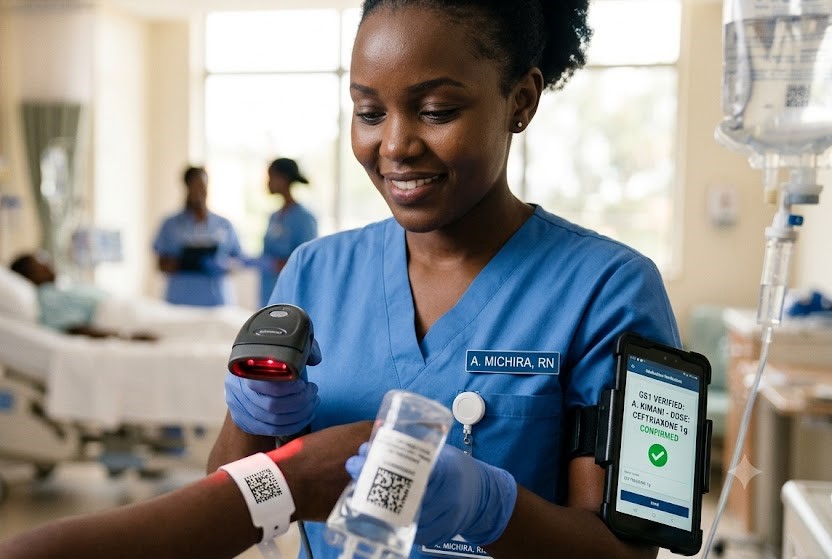

In every healthcare setting, the moment a patient receives medication, undergoes a procedure, or is fitted with a medical device is a critical point of care. It is also the point at which even the smallest error can have significant consequences. A patient identified incorrectly, a medicine administered in the wrong dosage, or the use of an unverified medical device can quickly turn routine care into a life-threatening situation.
As healthcare systems around the world strive to improve patient safety and deliver better outcomes, one solution is quietly transforming the way care is delivered: globally harmonized standards. Through standardized identification and traceability, GS1 standards are helping healthcare providers reduce medical errors, strengthen supply chain visibility, and ensure that the right patient receives the right treatment at the right time.
This timely topic will be explored during this week’s virtual Traceability Week, where healthcare professionals will come together to examine how GS1 solutions are improving patient safety and building more resilient healthcare systems.

Medical errors remain one of the most pressing challenges facing healthcare today. Despite advances in medicine and technology, preventable errors continue to occur because of inaccurate patient identification, manual data entry, incomplete product information, and limited visibility of medicines and medical devices as they move through the healthcare supply chain. These challenges not only affect patient outcomes but also place an additional financial and operational burden on healthcare institutions.
The adoption of GS1 standards addresses many of these risks by creating a common language for identifying patients, products, locations, and healthcare assets. Through globally unique identifiers and standardized barcodes, healthcare providers can accurately verify medicines, medical devices, and patient information before care is administered. This reduces reliance on manual processes while improving confidence in clinical decision-making.
The impact extends well beyond the bedside. From manufacturers and distributors to hospitals and pharmacies, standardized traceability enables healthcare stakeholders to follow the movement of products throughout the supply chain. This visibility allows organisations to respond more effectively to product recalls, identify counterfeit medicines, improve inventory management, and ensure critical healthcare products reach patients safely and efficiently.
As healthcare systems continue to embrace digital transformation, interoperability and trusted data have become essential components of quality care. GS1 standards provide the foundation that allows different healthcare systems and technologies to communicate using accurate, consistent information. The result is a safer and more efficient healthcare environment where clinicians spend less time resolving data inconsistencies and more time focusing on patient care.
For healthcare leaders, the conversation is no longer whether traceability is important, but how quickly organisations can implement globally recognised standards that improve safety, efficiency, and accountability. Across the world, governments and healthcare institutions are increasingly recognising that standardized identification is fundamental to strengthening health systems and protecting patients.
It is against this backdrop that Traceability Week brings together healthcare professionals, policymakers, industry experts, manufacturers, technology providers, and supply chain specialists to explore practical solutions that are shaping the future of healthcare. The virtual event will showcase GS1 solutions that enable end-to-end traceability while highlighting real-world applications that are reducing medical errors at the point of care.
For healthcare professionals committed to improving patient outcomes, this week’s discussion offers an opportunity to gain valuable insights into one of the most important enablers of patient safety in modern healthcare. Whether your role is in clinical practice, pharmacy, procurement, healthcare administration, medical technology, or supply chain management, the conversations promise practical knowledge that can support safer and more connected healthcare delivery.
As healthcare continues to evolve, one principle remains unchanged: every patient deserves safe, accurate, and reliable care. By strengthening traceability and standardizing information across the healthcare ecosystem, GS1 standards are helping make that goal a reality.
Join us virtually during Traceability Week, and be part of the conversation on how GS1 solutions are reducing medical errors at the point of care and shaping a safer future for healthcare.


