


Fifty years ago, a simple set of black lines quietly transformed global commerce. What was introduced to speed up supermarket checkouts soon became the universal language of trade, allowing businesses around the world to identify products accurately, manage inventory efficiently, and move goods seamlessly across increasingly complex supply chains. Today, nearly every product we buy from groceries and pharmaceuticals to electronics and apparel—owes part of its journey to the humble barcode.
But like every great innovation, the barcode is evolving.

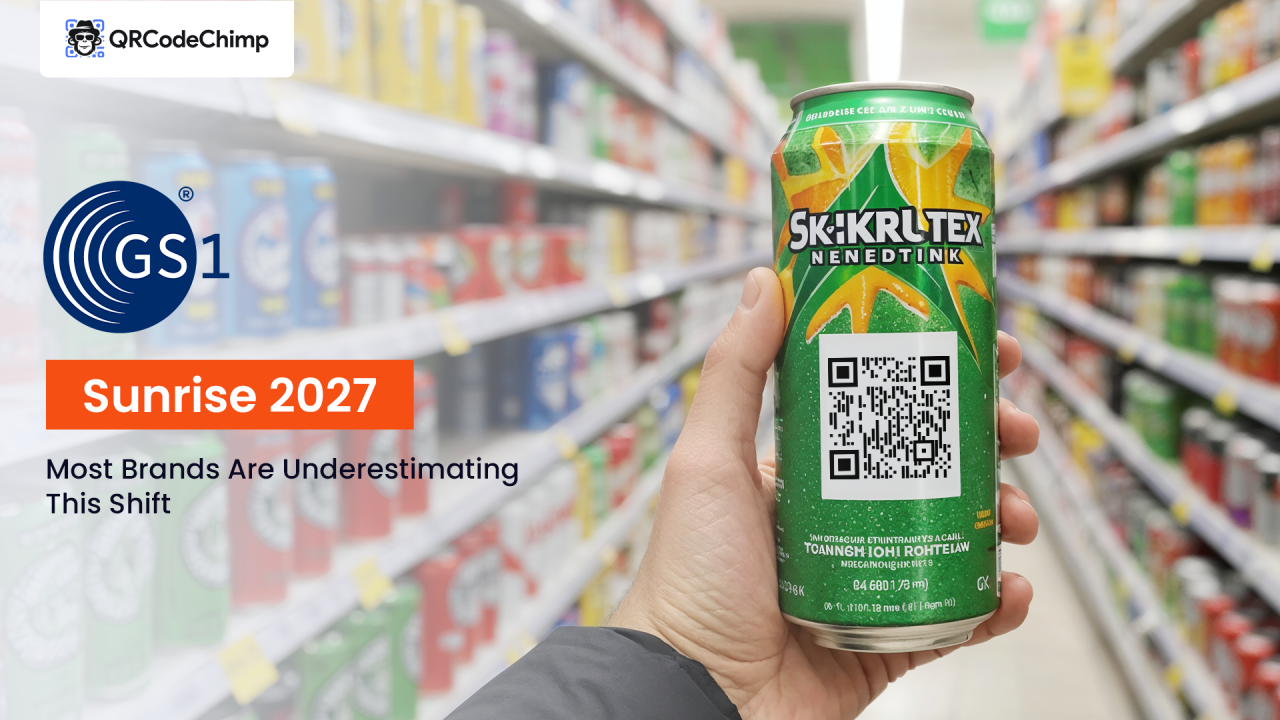
Around the world, businesses are preparing for Sunrise 2027, a global GS1 initiative that marks one of the most significant changes in retail technology since the barcode was first introduced. By the end of 2027, retailers are expected to have point-of-sale systems capable of scanning both the traditional one-dimensional (1D) barcode and the new generation of two-dimensional (2D) barcodes, including GS1 QR Codes and GS1 DataMatrix symbols. Rather than replacing the familiar barcode overnight, Sunrise 2027 enables a smooth transition to a future where a single barcode can do far more than identify a product.
The timing could not be more relevant. Supply chains are becoming more complex, consumers are demanding greater transparency, regulators are strengthening traceability requirements, and businesses are under increasing pressure to improve efficiency while reducing waste. The traditional barcode has served the retail industry remarkably well for decades, but it was designed for a different era. Today’s digital economy requires products to carry richer, more dynamic information than a linear barcode can accommodate.
A 2D barcode changes that entirely.
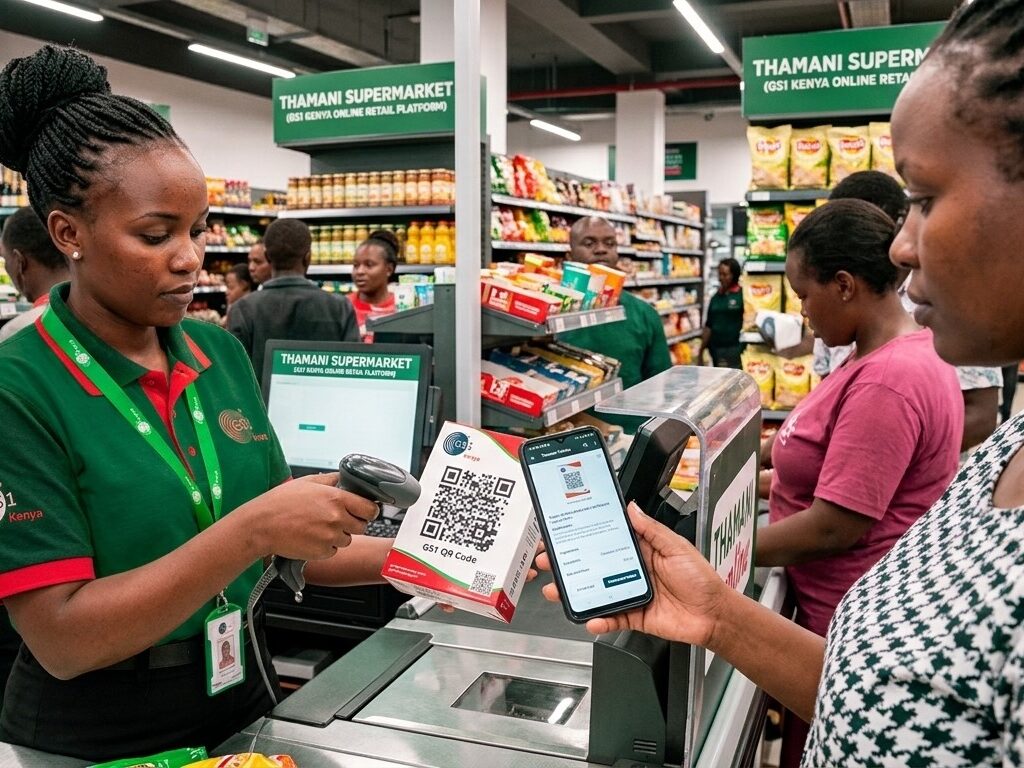
Beyond simply identifying a product at checkout, it can carry batch and lot numbers, expiry dates, serial numbers, production information, authentication details, sustainability credentials, web links, and recycling guidance—all within a single symbol. More importantly, the same barcode can support both business operations and consumer engagement. A retailer can scan it to process a sale or verify an expiry date, while a shopper can use a smartphone to access trusted product information directly from the manufacturer. One barcode, two experiences.
This seemingly small change has the potential to reshape retail. Imagine supermarkets automatically preventing expired products from being sold, manufacturers tracing affected products during a recall within minutes rather than days, or consumers instantly verifying whether a product is genuine before making a purchase. These are no longer future possibilities; they are practical applications already being tested and implemented around the world.
Leading retailers and global brands have already begun demonstrating the value of 2D barcodes. In Australia, supermarket chains are piloting the technology to improve expiry-date management, helping reduce food waste while ensuring fresher products reach consumers. Across Europe, retailers are using GS1 QR Codes to provide shoppers with detailed information about a product’s origin, ingredients, sustainability credentials, and certifications, strengthening consumer trust through greater transparency. Global manufacturers are leveraging the technology to improve product recalls, strengthen traceability, and combat counterfeiting, while healthcare providers are enhancing patient safety by identifying medicines with greater precision. The same technology is also laying the foundation for Digital Product Passports, which are expected to become increasingly important in international trade and sustainability reporting.
These examples carry important lessons for Africa. Rather than viewing Sunrise 2027 as another international compliance requirement, businesses across the continent have an opportunity to leapfrog into a smarter retail ecosystem. Many retailers are already investing in digital transformation, modern point-of-sale systems, and e-commerce platforms. Integrating 2D barcode capabilities into these investments can improve inventory accuracy, reduce losses from expired stock, simplify product recalls, strengthen consumer confidence, and provide valuable business intelligence. For exporters, aligning with globally recognized GS1 standards also enhances competitiveness by meeting the expectations of international markets where traceability and transparency are becoming standard business requirements.
Kenya is particularly well positioned to embrace this next phase of barcode technology. Through GS1 Kenya, many organizations have already adopted global standards that strengthen product identification, improve supply chain visibility, and enhance traceability across sectors. Healthcare institutions are implementing GS1 standards to improve patient safety and the traceability of medical products. Manufacturers are using Global Trade Item Numbers (GTINs) to uniquely identify products, while distributors and logistics providers are applying standardized identification to improve visibility throughout the movement of goods. Many businesses have also begun using QR codes to authenticate products, connect consumers with trusted product information, and create richer digital experiences.
These early successes demonstrate that the foundations for Sunrise 2027 already exist. The next step is not to start from scratch, but to build on the progress already made by enabling products to carry richer, standardized data that benefits every participant in the supply chain.
For Kenyan manufacturers, the journey begins with preparation rather than immediate transformation. Businesses should assess whether their current packaging, printing processes, enterprise systems, and product identification strategies are ready to support GS1 2D barcodes. Retailers should evaluate the readiness of their point-of-sale infrastructure to scan both 1D and 2D barcodes, while technology providers should begin supporting the transition through software and hardware upgrades. Equally important is ensuring that internal teams from production and quality assurance to IT, packaging, and marketing understand the opportunities presented by this new generation of barcodes. Organizations that begin planning today will be better positioned to adopt the technology smoothly and maximize its benefits as global implementation accelerates.
The barcode has always been much more than a collection of lines on a package. It is the invisible infrastructure that enables trust, efficiency, and interoperability across global commerce. Sunrise 2027 represents the next chapter in that story, a chapter where products become smarter, supply chains become more transparent, consumers become better informed, and businesses become more resilient.
For Kenya, this is not simply about keeping pace with a global initiative. It is about strengthening local industries, supporting exports, enhancing consumer confidence, reducing waste, improving traceability, and positioning the country as a competitive participant in the future of global trade.
GS1 Kenya is committed to supporting this transition by working closely with manufacturers, retailers, healthcare providers, logistics companies, regulators, and solution providers to accelerate awareness, build technical capacity, and encourage industry-wide adoption of global standards. Sunrise 2027 is not a distant milestone it is a call to prepare today for the future of commerce.
The barcode is evolving. The question is no longer whether businesses should make the transition, but whether they will be ready to seize the opportunities that come with it.
The future of the barcode has arrived. The question is: Will your business be ready for Sunrise 2027?
By Enterprise Hub


