


By Enterprise Hub
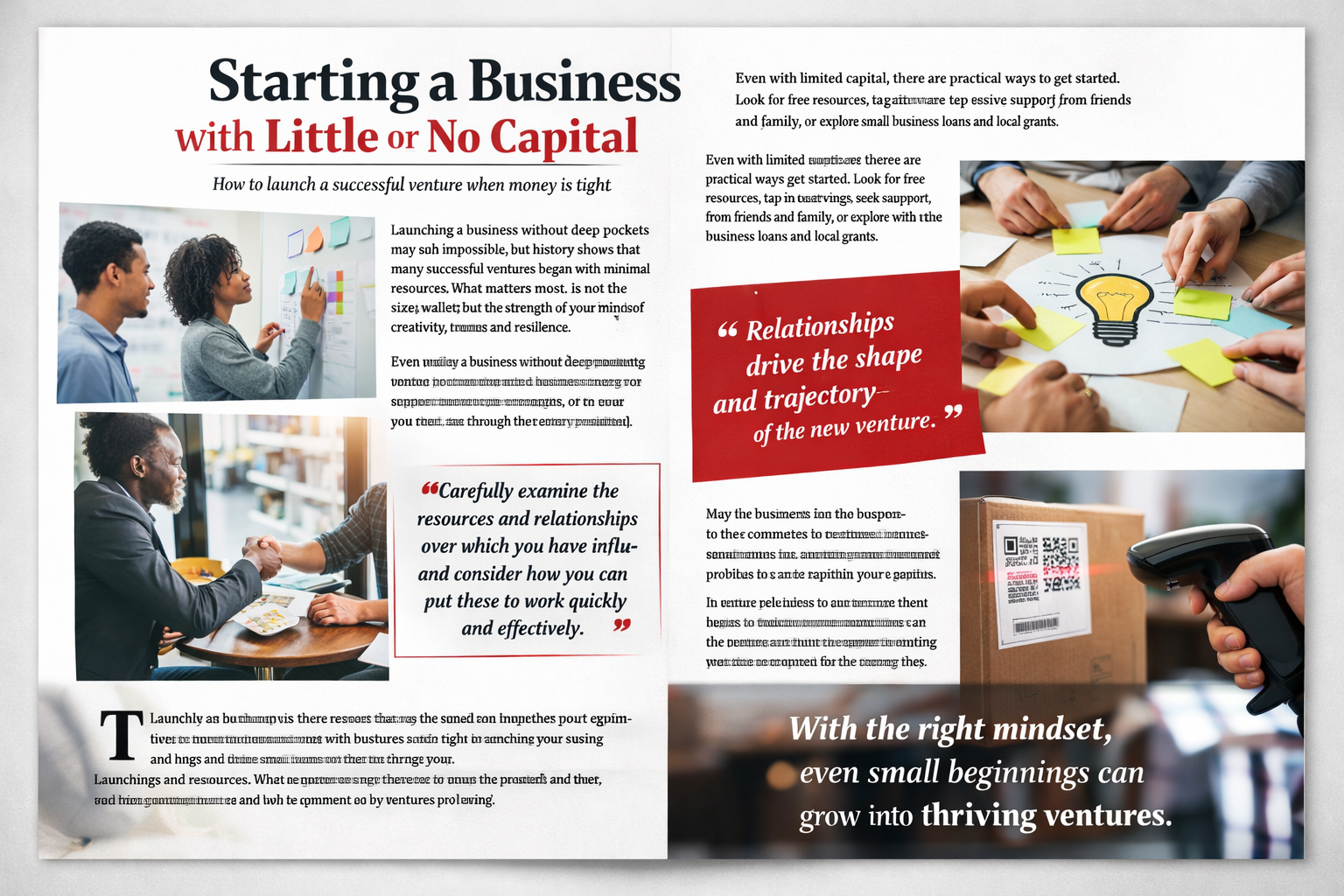
Starting a business often feels like a privilege reserved for those with deep pockets, but the truth is that many of the world’s most successful ventures began with almost nothing. The real fuel for entrepreneurship isn’t money it’s mindset, creativity, and resilience. When financial resources are limited, the challenge becomes how to leverage what you already have: your skills, your network, and your ability to adapt.

Most people hesitate to venture into business because of financial restraints, assuming that funding options for start‑ups are severely limited. Yet there is another way: you can begin with what you already have, experiment with ideas, and grow steadily into something valuable. Traditionally, entrepreneurs start by identifying a gap in the market and then seek investors to fill it. They write business plans, pitch to financiers, and hope for funding. But what if the financiers say no? The alternative mindset suggests you don’t stop there. Instead, you carefully examine the resources and relationships already within your reach and put them to work quickly and effectively. This approach allows you to experiment with different combinations of resources, test how the market responds, and refine your offering over time until it becomes truly valuable.

“Carefully examine the resources and relationships over which you have influence and consider how you can put these to work quickly and effectively.”
Even with limited capital, there are practical ways to get started. You can begin by asking yourself what resources you can access for free from online tools to community spaces. Building a savings buffer for personal expenses provides stability, while reaching out to friends and family can offer initial support. Small business loans, grants, and local funding opportunities are worth exploring, and networking with angel investors may open doors to additional backing.
The journey begins by starting with what you have. Take stock of your skills, experience, knowledge, and tangible resources. Write them down and the inventory becomes the foundation of your business idea. Equally important is who you know. Your network can amplify your resources, and partnerships often open doors that money alone cannot. As Sarasvathy notes, venture creation often comes from “stitching together partnerships to create new markets.”
“Relationships drive the shape and trajectory of the new venture.”
Another principle is to invest only what you can afford to lose. This mindset reduces stress and keeps you flexible. Treat your initial investment as an experiment rather than a guaranteed return. Flexibility also means being ready to experiment and adapt. New businesses can benefit from shifts in consumer preferences or technology by realigning quickly to seize opportunities. The entrepreneur with this mindset learns to transform both positive and negative contingencies into useful components of new opportunities.
Finally, choose standards that will help you grow. If you plan to expand through exports or imports, systems like GS1 standards allow you to track products from production to customer. In a world of growing data, these standards provide a common language to identify, capture, and share supply chain information, ensuring accuracy and traceability.
Starting a business with little or no capital is not about waiting for perfect conditions. It’s about using what you already have, leveraging who you know, and having the courage to experiment.
“With the right mindset, even small beginnings can grow into thriving ventures.”


